
Many people might be plotting their strategy for Black Friday — online or Big Box store shopping? Others are worrying about seating arrangements for Thanksgiving and how to muzzle the conservatives and liberals. Perhaps you’re tuning up the snowblower ahead of you-know-what.
North Country residents don’t fret about the S-word. Heck, they watched snow flurries fly last Friday and Saturday.
What any good sports fans should worry about is not the NFL, NHL, NBA or college football and basketball landscapes. This son of a baseball coach is focused on Dec. 1, the day the labor contract between Major League Baseball Players Association and franchise owners lapses.
I’m not giddy about spring. A lockout is looming. As negotiations stand now, pitchers and catchers won’t be the first to report to Florida and Arizona. They’ll be home perfecting their golf swings or watching March Madness.
The stalemate boils down to players’ unwillingness to accept a salary cap and greedy owners who see it as another step to squeeze salaries and maximize profits for franchises already commanding record sale amounts.
Examine the San Diego Padres, who were sold in 2012 for $800 million. The Padres went back on the market in August and fetched $3.9 billion, almost a five-fold increase. In the same 15-year period, minimum salaries have essentially doubled from $400,00 to $780,000 annually. You decide who is getting the better end of the current labor contract.
“I’m not sympathetic to either side,’’ said Tom Luckie, New York Yankees fan and retired executive director of the Ogdensburg Boys & Girls Club. “There is so much money out there for both sides.’’

He remembered the ending to the 1994 season when a players’ strike cost Yankees Hall of Famer Don Mattingly a chance to win the World Series (he never won in 14 seasons) and the nearby Montreal Expos, the best team in baseball with a sterling 74-40 record, were shut down, starting a spiral that resulted 10 years later in relocation to Washington, D.C.
“The owners and players have lost a bunch of young fans and kids who don’t follow baseball like they used to,’’ Luckie said.
He blamed the money-grab of cable networks and streaming services, but credited a fantasy baseball league for retaining his diminished interest. He said he without a baseball season he’ll focus on reffing a handful of high school basketball games and “the constant battle’’ to hone his golf game.
You wouldn’t imagine a member of the New York State Basketball Hall of Fame to maintain a rooting interest through this stalemate. But retired OFA coach Bill Merna has carried a torch for Cleveland since he was an 8-year-old growing up a block from the playing fields in West Utica.

“I want a hard salary cap so the Los Angeles Dodgers don’t get every high-priced free agent,’’ Merna said. “If the union and management are both so greedy that they can’t figure this out, they can do great harm to MLB.’’
Merna and I share a devotion to Cleveland baseball. My fondness for the Indians developed from 1979-84 when I worked as a newspaper reporter and sports editor in suburban Cleveland. Merna traced his fandom to an uncle. After his father passed when he was 3, Uncle Bernie Nelson, the devout Indians fan, became a surrogate parent and role model.
“He tired of pulling for a sure thing and so he rooted for the next best team — the Cleveland Indians. Good enough for Uncle Bernie was good enough for me. At that time, once you picked a team, you stayed with them.’’
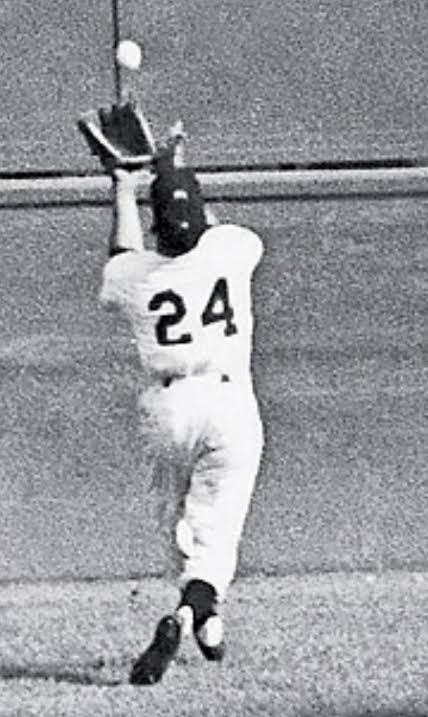
So we have remained loyal despite not having a won a World Series since 1948, despite Willie Mays back-to-home-plate catch turning the 1954 Series in the New York Giants favor, despite losing the Series in 1995, 1997 and 2016, through a name change five years ago to the Guardians. That’s a 78-year span. Guardians fans don’t pity Yankee fans who have won 27 World Series but haven’t held the trophy since 2009.
Here is why both sides are far apart in talks:
Salary cap: Owners wants to limit player salaries with a cap, similar to the NFL, for “competitive reasons.’’ Players steadfastly oppose any measure to limit their earning potential.
Salary floor: After imposing a $258 million salary cap per team, owners suggest a $180 million floor to even out payrolls. Players know that will slash money from the marketplace.
Cleveland spent about $70 million on salaries last season; the New York Mets doled out about $350 million. The Dodgers are committed to $2.1 billion in salary guarantees. That is your primer on small-market vs. large-market teams.
Player drafts and compensation: Owners want to cut eight rounds from the player draft and limit international signings, curb signing bonuses in both instances, and cap free-agent contracts at five years. Players see it as another ploy to restrict salaries.
Paul Hoynes has been the Cleveland baseball writer since he left my newspaper, The News-Herald, in 1983. Last summer, he was inducted into the writers’ wing of the Hall of Fame in Cooperstown. He realizes a work stoppage is imminent.
“Yes, the two sides are talking before the basic agreement expires Dec. 1, but these negotiations are never about the fans,’’ Hoynes said on a recent podcast. “It’s always about the money — the players want more, the owners want to give them less.’’
Don’t make plans to avoid the snow and head for spring training.
Morristown native Jim Holleran is a retired teacher and sports editor from Rochester. Reach him at jimholleran29@gmail.com or view past columns under “Reflections of River Rat’’ at https://hollerangetsitwrite.com/blog/

