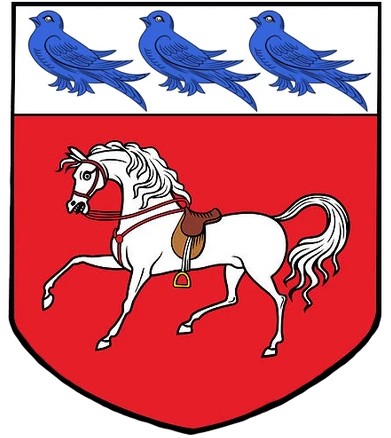
I was about halfway through my genealogy primer when I realized the defib paddles were about to resuscitate my family heritage project.
I would be able to sort the facts from the fiction about who, when, where and how the Holleran clan arrived from Ireland. No more “I’ll get to it someday when I have more time.’’ No more “I think my dad’s family came from Ballina in Mayo.’’ No more wisecracks about “Hey Holleran, which bog did you bubble up from in Ireland?’’
I’ve arrived at a plan thanks to my friend Terry Corcoran Skelly, and it all emerged from absolute serendipity.
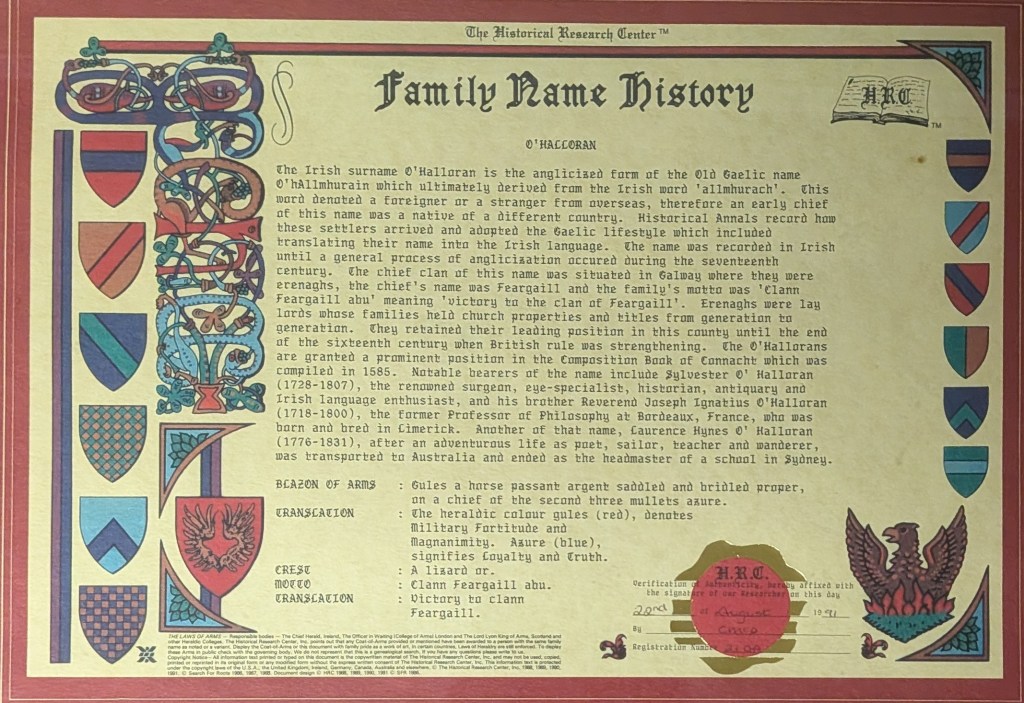
The heritage intrigue originated in my youth when I listened to aunts and uncles relate how the original family surname was O’Holleran when our forebearers arrived in New York City in the 1850s. The “O’’ was dropped, a frequent tactic to find jobs and housing when Irish immigrants were considered the dregs of society.
My father’s family repeated this tale at wakes, weddings and reunions, often with a chorus or two of George M. Cohan’s “Harrigan,’’ cleverly changed to “Holleran.’’
H O double-L E R A N spells Holleran
Proud of all the Irish blood that’s in me
Divvil a man can say a word agin me
H O double-L E R A N you see
Is a name that a shame never has been connected with
Holleran, that’s me!
Over time, I learned that was more fiction than fact. The first Holleran arrived through Canada, settled around Rutland, Vermont, then my grandfather moved around World War I to Ilion, NY, to work at Remington Arms. My father, Francis, a newlywed with Eileen Maxwell, took his phys ed and coaching job at Morristown Central School in 1950.
I thought I’d get the family history gift-wrapped by a cousin who did extensive research at the National Archives in Washington. He posted pictures of gravestones, documents and shared research on Facebook, but this Tea Party fanatic became disenchanted with my rampant liberalism and de-friended me about 15 years ago. I never got a chance to copy his research.
About three years later, I flirted with the research idea again while visiting a genealogical library at Mormon headquarters in Salt Lake City, but the urgency focused on getting my son Liam to his first job in Los Angeles. Family research could wait.
A fortunate coincidence occurred in September 2025 when Mary and I took our daughter Kathleen on a tour of Northern Ireland with her folk singing hero John Dady. We struck up a friendship with Terry. It was cemented when she asked Mary to accompany her on a taxi ride to her McFarland ancestors’ land outside Ballymacnab, County Armagh.
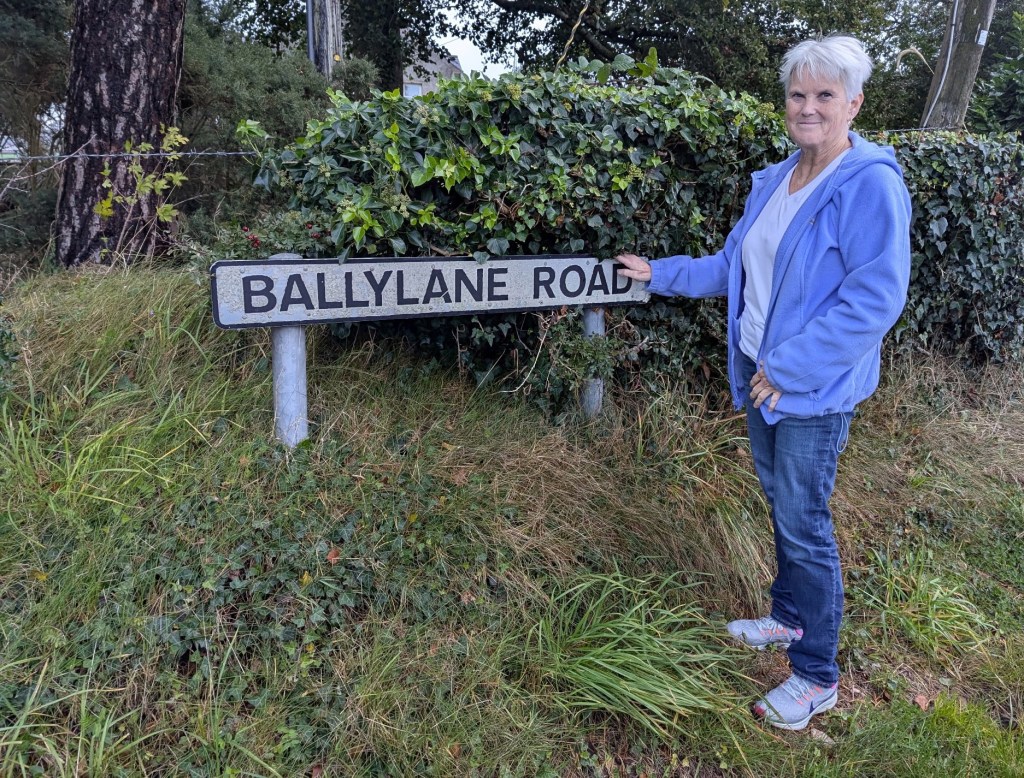
The cab driver let Terry sit in the front seat, roll down windows, shoot videos and stop for photos as they cruised two-mile long Ballylane Road. She recalled how the McFarlands emigrated to Rochester in 1862, how she had fallen in love with genealogy in sixth grade, and too frequently stayed up until 3 a.m., while her children slept and husband worked, to uncover birth certificates, ship registries and Census records.
She had been pursuing this passion for 30 years, then the taxi ride helped her realize a childhood dream.
“My heart was simply exploding with joy, gratitude and pure happiness as I felt as though I had ‘come home.’ ”
We agreed that when we returned home she would provide a crash course in family research. Six months passed. We never connected.
Then she popped into our annual St. Patrick’s Day party and spotted my friend, golfer, piemaker and friend from the Penfield Irish mafia, Dan Macpherson. Terry the researcher had discovered they were cousins. Small world. More time passed.
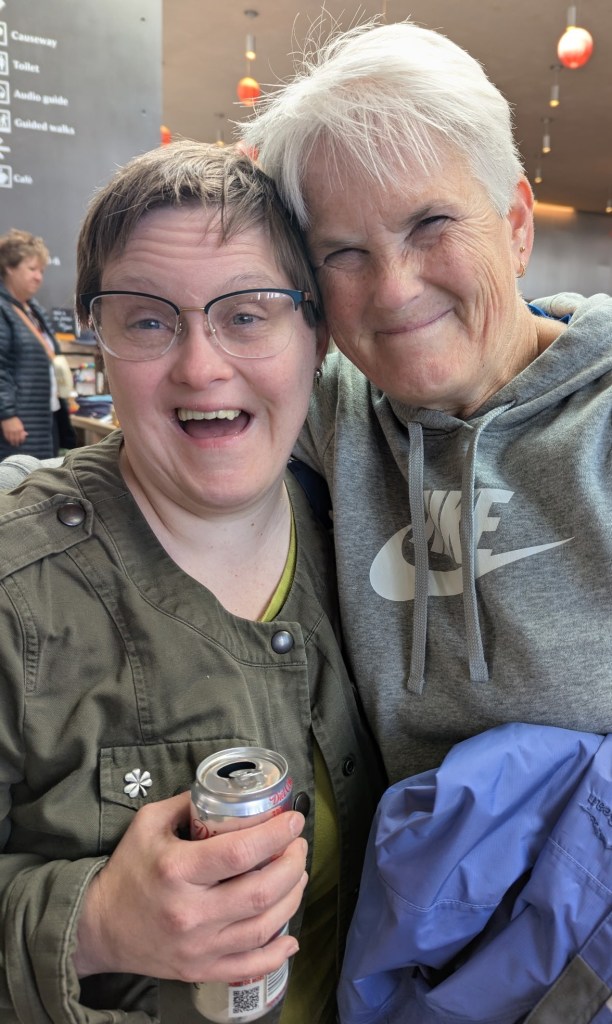
We recruited Terry for our volunteer group, Sleep In Heavenly Peace-Rochester, which constructs and delivers beds for children in need. She was hooked on the whole charitable concept. Still no skull session.
In my head, I knew the Maxwell side would be easier. My maternal great-grandmother, Anna McInerny, arrived from County Clare, Ireland, in the 1880s. She met Adolph Stock, who emigrated from Bavaria, Germany. That led to a Stock-Maxwell union, then a Maxwell-Holleran wedding.
The Holleran side will be more challenging. Francis Daniel Holleran and Mary Agnes McCann produced my father, but beyond that I’ll need to start from scratch.
Enter Terry. Armed with a laptop, she led me through the best websites, explained strategy to sort conflicting information between sources, and how multiple spellings of names exist. For instance, I saw a family gravestone in Vermont spelled HOLRAN.
I’m ready to begin building a family tree. I hope the branches aren’t too gnarled. Also, I’ll let you know the correct spelling of my bog … and whether it’s a toxic site.
Morristown native Jim Holleran is a retired teacher and sports editor from Rochester. Reach him at jimholleran29@gmail.com or view past columns under “Reflections of River Rat’’ at https://hollerangetsitwrite.com/blog/

