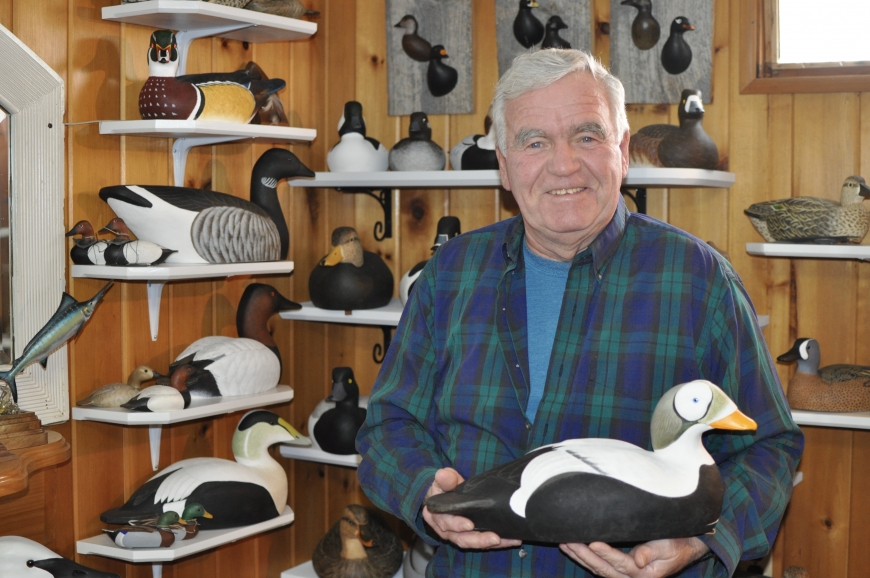

Dick Hollis hails from a generation when duck decoys were carved by hand. You didn’t swing through a discount store and pay about $40 for a six-pack of decoys made from plastics or synthetics. You carved them amid a pile of shavings in a workshop, with shelves holding brushes and cans of brightly-tinted paints.
The Lisbon resident has turned his hobby into an art form with hand-carved decoys and detailed paint jobs. They are intended as keepsakes in a family room rather than a lure for unsuspecting ducks along the St. Lawrence River. He has been practicing his craft for 63 years and doesn’t have plans to slow down.
“I feel blessed and fortunate that I am able to do the quality of work that I do in the carvings,’’ said Hollis, 76, a retired carpenter and locksmith. “Even after all of these years, I’m sometimes still amazed that the finished piece was just a piece of wood not long ago.’’
It’s a family tradition. Hollis’s father began carving when he was a teenager, then began training his son when he was 13 years old.
The craft has led Hollis to display his work at shows around Ohio, California and New York State, including the Clayton Decoy Show in July, which has been running for 58 years. Organized by the Thousand Islands Decoy Collectors Association, the exhibition gives decoy artists and collectors a forum to display their work, talk about techniques and make connections.
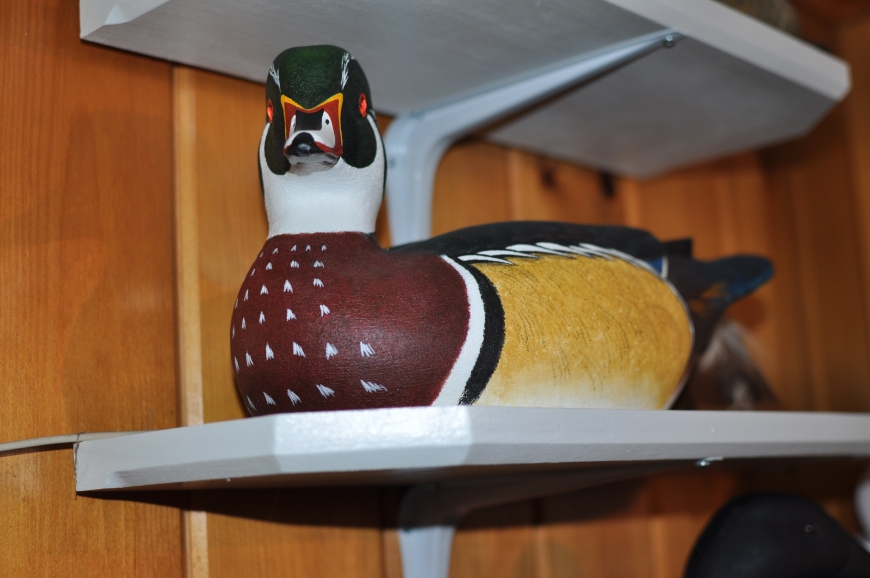
Perhaps you’ve seen his work displayed locally at the Remington Museum or a presentation at the Ogdensburg Public Library.
“My favorite wood to use is native white pine, but I make a lot of decoys out of white cedar and some from basswood,’’ Hollis said. “I paint mostly in acrylics, and some with oil paints.’’
Duck hunting season in the North Country starts in late September but Hollis’s artwork remains a caliber above what you’ll find at an outdoors shop.
“The plastic and combination plastic/foam decoys are definitely more logical for actual decoys to use for hunting,’’ he said. “They’re practically indestructible and require very little maintenance. Very cost-effective too.’’
When waterfowl see a decoy floating on water, they assume it’s a safe spot to land and feed. Hunters have been using duck decoys since 2500 B.C. when the Egyptians floated clay decoys in the Nile River to attract ducks and geese. Sly Native Americans added reeds and feathers to their decoys. Wooden and cork decoys were the preferred medium during the 1880s to 1940s until synthetics flooded the market after World War II.
Hollis has been carving since the 1960s.
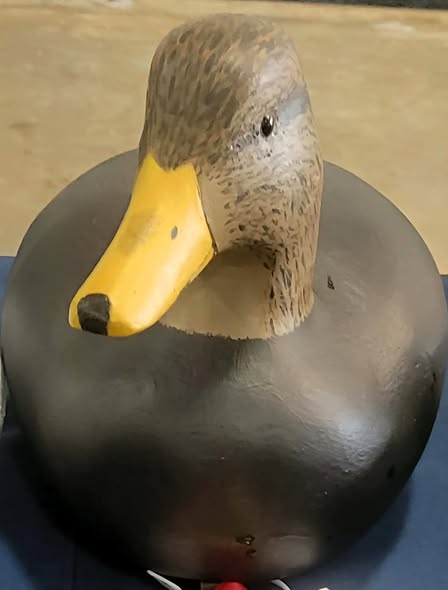
“I wish I would have kept count as to how many decoys I’ve made in the past 50-plus years,’’ he said. “I have to think it has to be at least 2,000, and I think that might be a little conservative. If it isn’t that many, it has to be awfully close to it.’’
“I make a variety of decoys, meaning some are just smooth and plain, some have a little bit of carving on them, some have a lot more carving. So the price range varies from a couple of hundred dollars to five, six, or seven hundred, all depending on how much carving is involved. Also, the fancier and more carving on a bird, the more time in painting it. The painting can be very time consuming.’’
During warm summer weather, you’ll find Hollis at his cottage where he focuses on painting two to three hours a day. When thermometers plummet, he returns home.
“During the winter months, I devote a lot of time to working on decoys. I do something with them every day. I can’t say I work 8 hours a day, but most days probably at least four to six hours. No weekends off either. It’s eight days a week all winter!’’
Hollis works in his barn to rough out his projects.
“All of the necessary tools I need to put out a decoy make a lot of dust so a barn it is for that. Any fine or intricate carving I do in the cellar of my house. Sometimes though, I even carve sitting in an easy chair in the living room. And yes, I do clean up my messes. Joanna (his wife) will attest to that.’’
Hollis fears decoy carving might become a lost art.
“There’s very little interest from the younger generation. I have five grandsons and none of them are interested in trying to make a decoy.’’
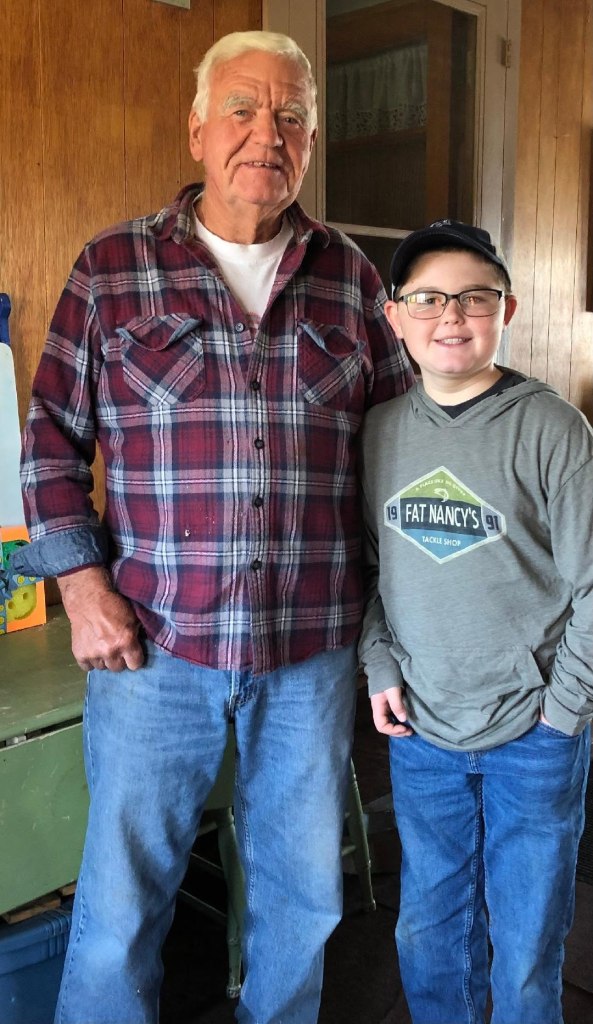
But he has identified a budding apprentice, Henry Ward, whom he met at age 12.
“He’s 13 now and I’ve been putting time in with him showing him the ropes. He’s very interested at this time in pursuing the craft and is eager to learn.’’
Ward’s grandmother, Barbara Briggs Ward, engineered the meeting between her budding outdoorsman and the veteran carver, and marveled at the connection they made and stories they shared. She gratefully posted of Hollis on Facebook: “The artist and decoy carver add a creative spirit to the North Country as do so many other such talented artists.’’
Morristown native Jim Holleran is a retired teacher and sports editor from Rochester. Reach him at jimholleran29@gmail.com or view past columns under “Reflections of River Rat’’ at https://hollerangetsitwrite.com/blog/


JIMMY does that guy sell his decoys?Sent from my iPhoneOn Sep 5, 2026,
LikeLike