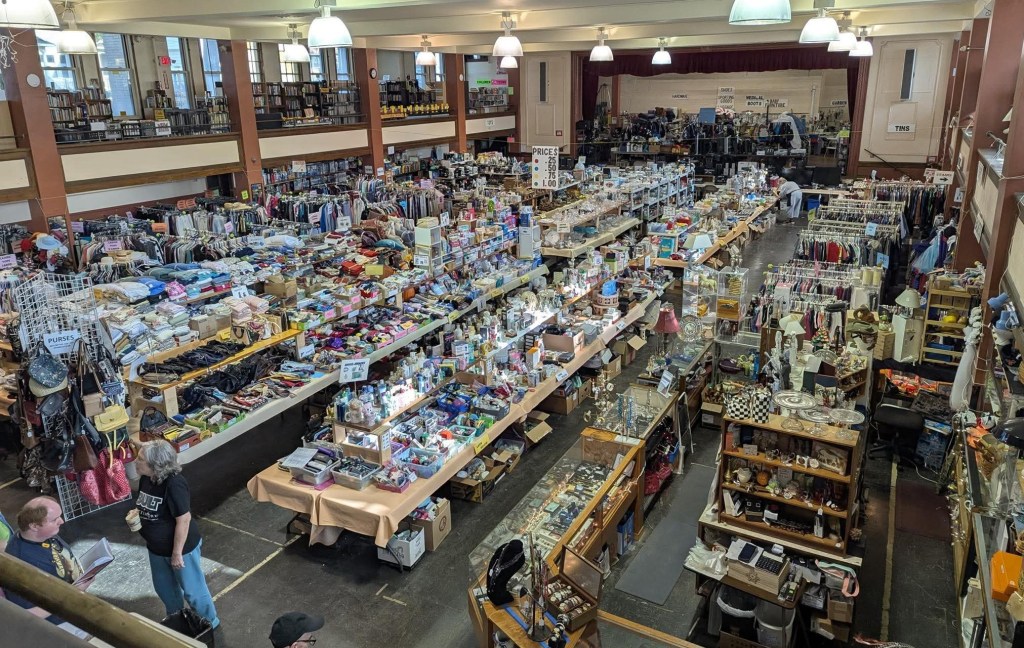

Working the chute at the parish rummage sale means you see just about everything.
Cars arrive alongside our school building, donors unload their treasures, and you pass them through the window. The donations are sent down a wooden chute to the gym floor where sorters dispatch donations to any department imaginable – housewares, linens, sporting goods, toys, shoes, clothing, Christmas décor, small appliances, etc.
Working the chute is an endurance test. We accept donations for eight hours a day, regardless of snow, rain, sleet or heat. Your back muscles chirp from the bending, lifting and carrying. Book boxes are the heaviest, exceeded only by bulky, first-generation microwave ovens.
Before you send donation boxes down the chute, you can’t help but scan the items. You sense when someone is disposing of junk, but you’re aroused when you spy rare, odd, bizarre or eclectic donations, the ones that stir a fond memory, take you back to your childhood or stun you with their value.
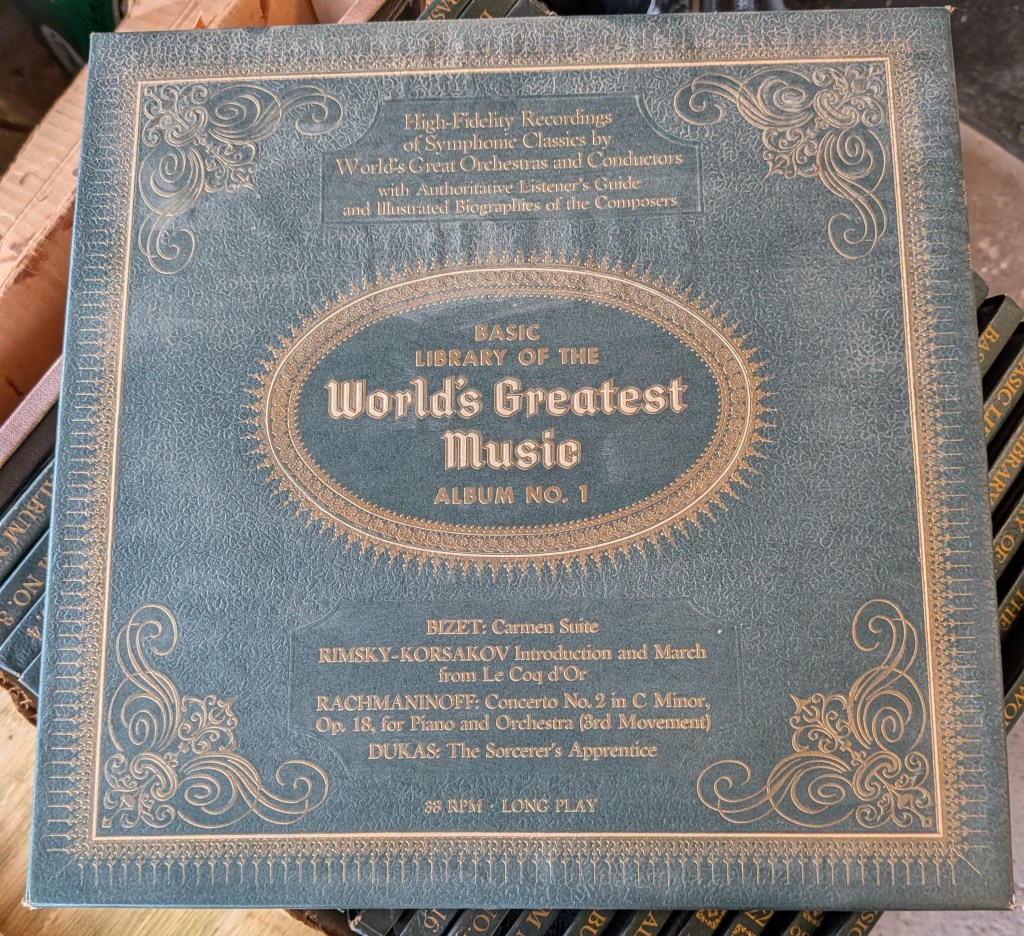
I thought we had a winner when I unpacked a 24-album set of vinyl records – World’s Greatest Music – each 33 rpm in its own box with liner notes. I messaged my friend at the vintage record store but she dampened my spirit. “Thanks for thinking of us, but we’ll pass.’’ Translation: They aren’t worth much.
“I can sell just about anything,’’ remarked Anna, who runs our boutique, a repository of collectible, eclectic and antique items. “But one of the strangest things we ever received was a bucket of lobster claws. I opened the lid and expected them to smell fishy but they were musty. I couldn’t sell those.’’
I chuckled when I saw a guy’s bowling scoresheet in an oversized framed. All his buddies commented and signed his 645 series. He was no Walter Ray Williams Jr.
As the donations piled up, I spied a bunch of baseball cards from the mid-80s. Jesse Barfield had a great arm but his card has meager resale value. Same for Trivial Pursuit sets. There was a View-Master projector from the ‘80s. Some sell for $20-$50 online.
Two lampshades were stuck together, prompting my remark: “Perfect for your next house party.’’ The exterior one was pristine; the inside one crumbled when I touched it. Trash. Another donor marked a bathroom scale “Does Not Work.’’ Then why donate it?
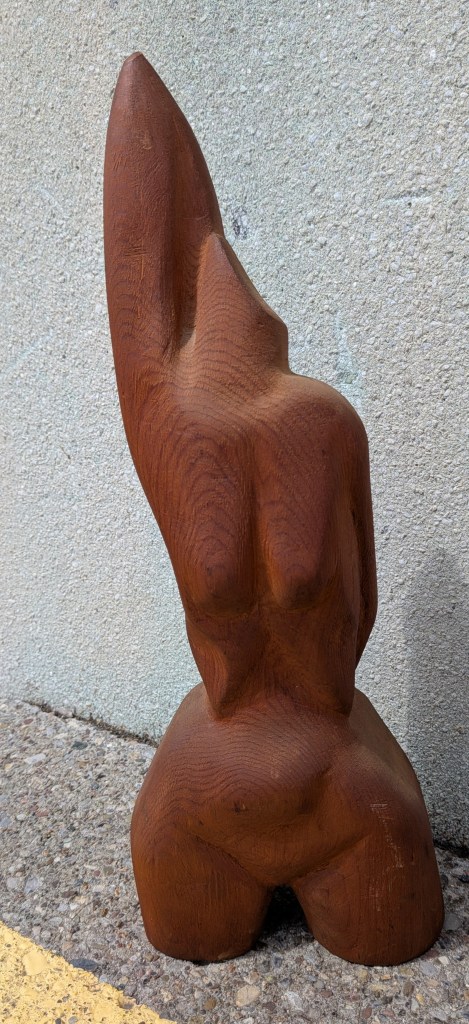
The interpretive wooden sculpture of a woman – abdomen, torso and pointy thing representing a head – had me wondering how many 9-year-olds would ask their parents, “What’s that about? Where are her clothes?’’ Pass.
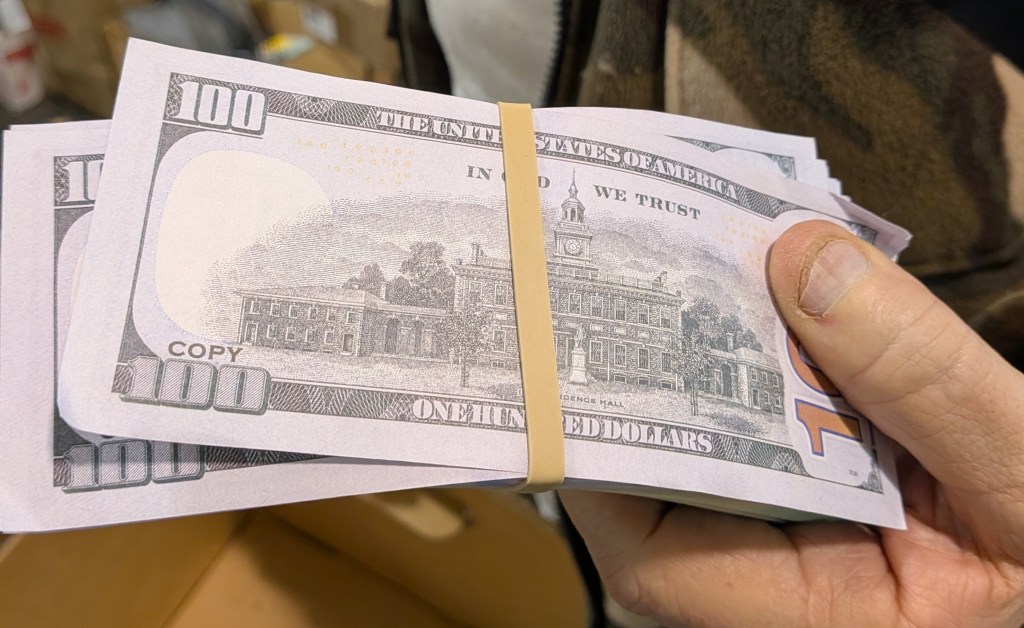
But there were finds among the boxes. One contained a 4-inch-thick stash of fake $100 bills, perhaps a stage prop. They were so realistic that we decided to keep them under wraps. We’d hate for someone to pass fake bills with the trail leading back to our rummage sale.
Jewelry donations are lucrative. One box was a goldmine. It held several nice pieces, and our sorter found $720 in cash in the bottom. We tested the bills with our counterfeiting pen. Bona fide currency!
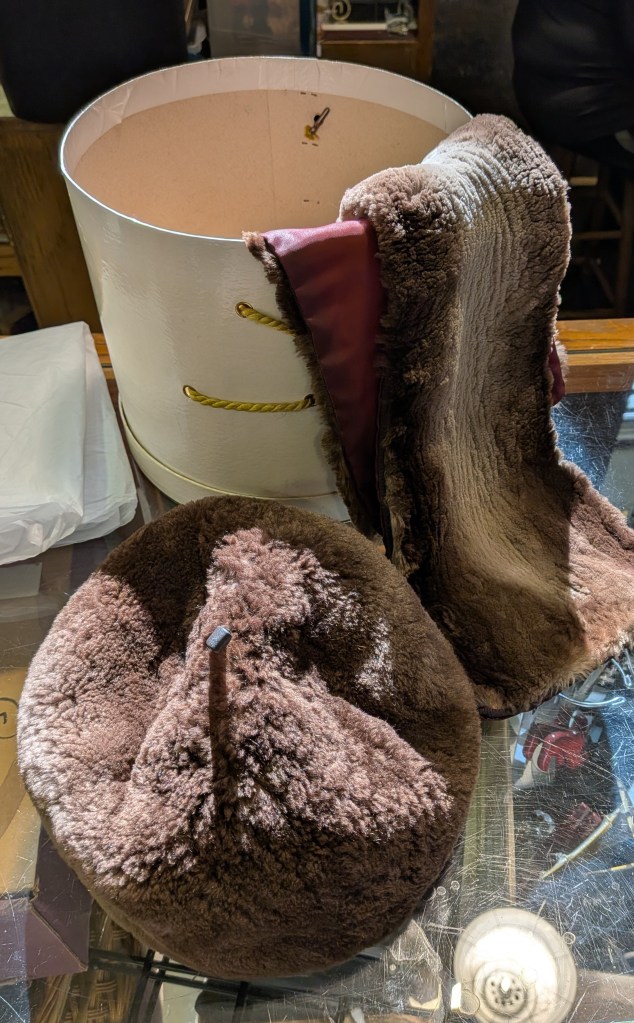
I happened across a unique find next. A round McCurdy’s department store box, probably from the 1960s, contained a fur hat and matching scarf. Written on the backside of the lid was “Beaver.’’ My mind flashed to a sepia-tinted photograph of my grandmother – Mary Agnes McCann Holleran – wrapped in a dead animal. I feared her more than any live animal.
But the best was yet to come. Late in the day, with back aching and weariness setting in, I spotted two baseballs in the bottom of a box. They were encased in plastic so I figured they came from a collector’s stash.
I had a hard time figuring out the high loops and curves of the cursive signature but the stamp on the Rawlings horsehide read clearly:
OFFICIAL BALL
NATIONAL LEAGUE
A. Bartlett Giamatti
His National League presidency lasted from 1986-89 and it helped me to realize this ball was authentic.
That was when Anna offered: “Oh, it’s Mike Schmidt.’’
So she looked up Schmidt, the Hall of Fame member who hit 548 home runs in 18 seasons with the Philadelphia Phillies, and learned the ball was worth $125-$150.
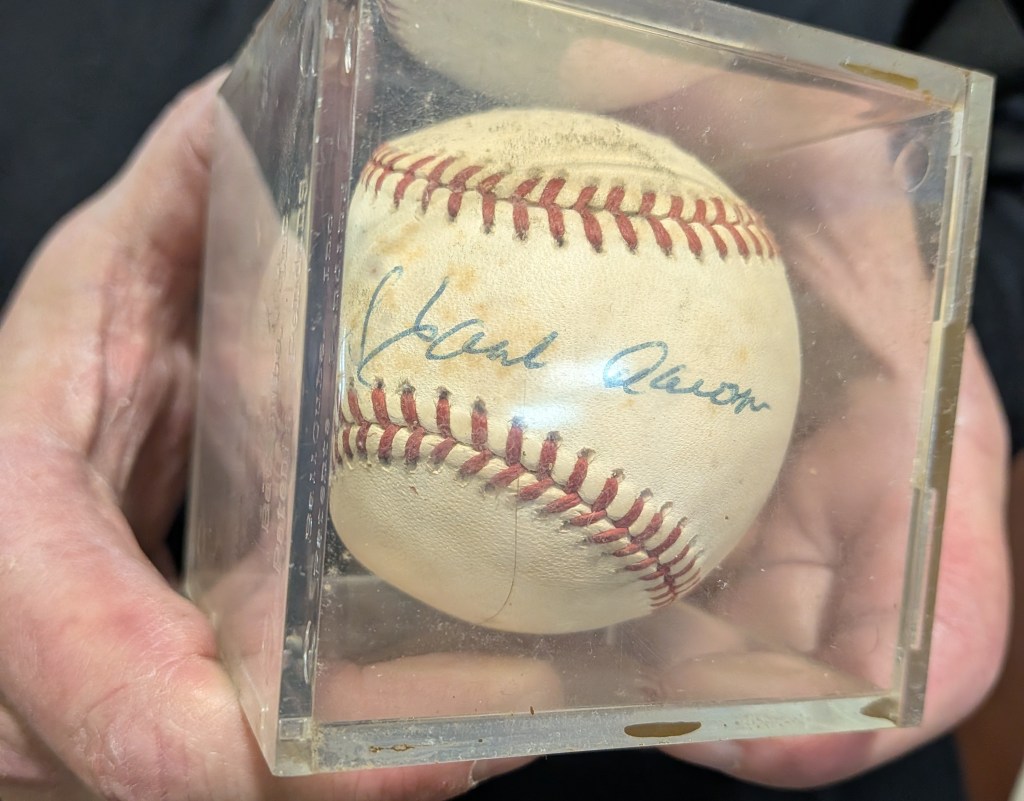
The second ball was a no-brainer. It also was a Rawlings National League ball used between 1989 and 1994 and stamped William D. White. The cursive signature was easily decipherable: Hank Aaron. He is considered by baseball purists, who disdain performance-enhancing drugs, to be the all-time home run king.
I looked up the ball online. The signature was a precise match. Its value – $400.
“Hey Anna,’’ I wisecracked, “this will fetch more than lobster claws.’’
Morristown native Jim Holleran is a retired teacher and sports editor from Rochester. Reach him at jimholleran29@gmail.com or view past columns under “Reflections of River Rat’’ at https://hollerangetsitwrite.com/blog/
 Holleran Gets It Write