

I am playing David’s role against the Philistine giant here. I am aiming my meager slingshot, loaded with one small stone, at the giant’s forehead and I’m hoping for the best.
In the Bible (1 Samuel 17), David flings his rock and it lodges in Goliath’s forehead, killing the ogre and leading the Israelites to a victory over the Philistines. Sometimes perfect shooting leads to upset victories (think Villanova over Georgetown for the 1985 men’s basketball title).
That’s what I am hoping for here as I wind up my slingshot – I’m begging, pleading, beseeching, requesting, praying, cajoling and exhorting you – quit relying upon, misusing and wearing out the word “literally.’’
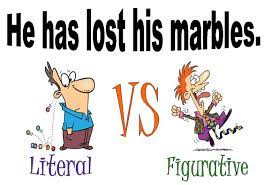
This is literally a national epidemic – see, the language bunglers have me doing it too.
Here’s the skinny. We are overwhelmed with “literally’’ being interjected into every other spoken sentence. It’s a crutch to help the Broca’s area of your brain sort out what phrase it will deliver next to your vocal cords.
In daily conversation, we use so many figures of speech and metaphors that we search for a word to emphasize our point of view. So we insert “literally.’’ It’s become like the Monty Python bit where King Arthur encounters the Knights of Ni. They terrorize Arthur’s men by repeating “ni (nee).’’ Silly and obnoxious.
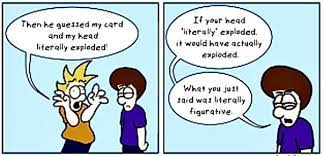
That brings us to “literally.’’ It means to describe something. Often, we use “literally’’ when we are speaking in a figurative manner. When you gush that Carlos Santana’s guitar solo literally blew my mind, you’re using a metaphor. Insert “figuratively’’ for “literally’’ and wordsmiths will smile.
“Literally’’ is overused so much that I tune out the speaker when I hear it.
Try these:
- actually
- exactly
- precisely
- truly
- really
I earned a paycheck for 30 years by writing well and monitoring other writers’ work to remove this sub-standard prose at the Paragraph Factory, also known as the Bellevue Gazette and The News-Herald in Ohio and the Democrat and Chronicle in Rochester. When you apply your intellect, it’s easy to be branded an elitist, or in today’s parlance, a “woke’’ editor. Sorry. It’s not about being sensitive and inclusive. The job is to serve the reader and make the prose more enjoyable, efficient and accurate. Herewith is my hit list of word and phrases I am literally aiming to eliminate (to quote Britney, oops I did it again):
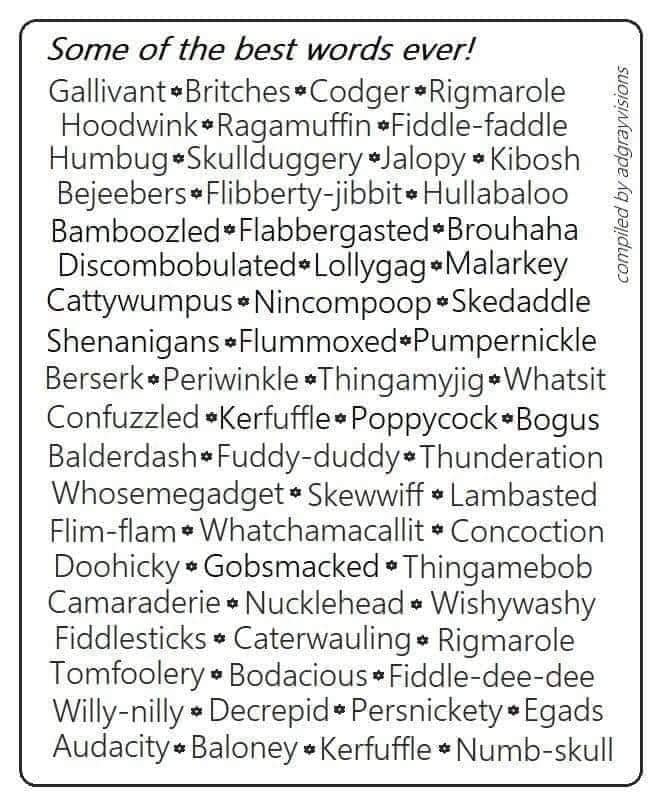
“It’s amazing,’’ and its spawn “it’s awesome” – These cringeworthy phrases remind of my worst teaching partner, who shrieked either expression whenever she described something. Both rose in the 1980s. “Amazing’’ became ubiquitous about the time Sean Penn’s surfer-dude character popularized “awesome’’ in the 1982 film “Fast Times at Ridgemont High.’’ I am hoping they have gone the way of “groovy.’’
Physicality – You’ll hear this often on football telecasts. “He plays with great physicality,’’ the commentator chirps. He or she should say the guy hits like a dump truck or blocks like a road grader. He is tough. It might have been the precursor to “arm talent.’’ In other words, he/she throws well.

“Isn’t it ironic?’’ – I always wondered if it rained on Alanis Morissette’s wedding day in 2010. Surely, the Ottawa native didn’t know enough to come in out of the rain when she wrote “Ironic’’ for her 1995 album “Jagged Little Pill.’’
When she penned those lyrics, she confused irony with coincidence for an entire generation of music fans. Now they don’t know the difference.
Let’s review:
“A traffic jam when you’re already late’’ (coincidence)
“A no-smoking sign on your cigarette break’’ (coincidence)
“It’s like ten thousand spoons when all you need is a knife (coincidence … but if you worked at a cutlery factory it would be situational irony).”
“You did good, honey!’’ – You hear that one from the sidelines of every dance recital, basketball game and graduation. One of the most abused phrases in our lexicon is the proper use of “good’’ and “well.’’
I doubt I’ll make a dent in this trainwreck of language, but use “good’’ to describe a noun. Seamus made a good play. Use “well’’ to describe a verb. Wesley played well.
The next time your restaurant server greets you and asks how you are doing tonight, respond with “well’’ and ask in return. I bet 8 out of 10 times the server will respond with “I’m doing good.’’
Speaking of restaurants, my late mother Eileen joked that she would return to work, not as a nurse, but as a waitress, then only serve people she didn’t like. She laughingly threatened to spit in their soup.
“I always wanted to use the words,’’ she would say, “What can I get yous?’’ That’s literally for another column at another time.
Morristown native Jim Holleran is a retired teacher and sports editor from Rochester. Reach him at jimholleran29@gmail.com or view past columns under “Reflections of River Rat’’ at https://hollerangetsitwrite.com/blog/


Thanks for that, Jim, from a fellow member of the Grammar Police. I also nominate “surreal” for being severely overused. Also, what ever happened to “ly,” that suffix that turned an adjective into an adverb? I think it has gone the way of the dodo.
Pat
LikeLike
I love it!
Sent from my iPhone
<
div dir=”ltr”>
<
blockquote type=”cite”>
LikeLike
You can’t do away with “bodacious” ! It is now part of NNY Basketball lore after the production of “The Bodacious Bears”. Don’t tell me you haven’t seen it ?
LikeLike
Send me a link
LikeLike