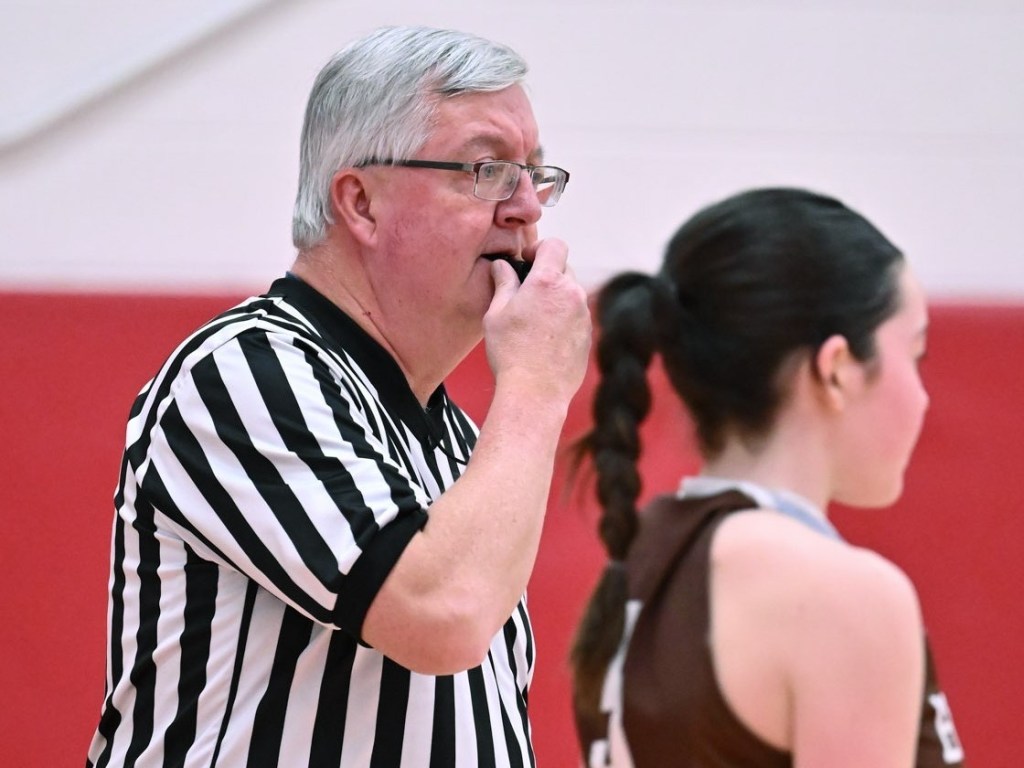

By day, Tom Luckie prepares for the afternoon onslaught when 140 children descend on the Ogdensburg Boys & Girls Club for afternoon programs.
By evening, he is monitoring an older population – the 60 or so referees who work high school basketball games throughout the North Country.
The number of children seems to be growing; the number of referees seems to be shrinking. The latter is a continuing worry, whether it’s Ogdensburg, Rochester, Florida or the entire country.

“We need men and women who might have played in high school who want to stay involved in sports,’’ said Luckie, the executive director of the OBGC who doubles as the referee assigner for Section X basketball games. “We have several guys in their 60s and 70s and I hate to imagine what might happen when they retire. We’re constantly looking for new members, younger members.’’
The National Federation of State High School Associations published research two years ago that found more than 50,000 officials across all sports had left the profession since the 2018-19 season. The numbers have only gotten worse.
The decline has been well-documented:
- Aggressive coaches and abusive fans – Watch TV or check the Internet for clips of fights or profane taunts.
- Low pay for the time involved – Some nights I drive 50 miles each way, observe JV refs, work the varsity game, then return home to file sportsmanship reports and JV evaluations. For my six hours and gas expenses, I collect $121. The nut jobs from the previous paragraph would say I didn’t earn it.
- Pandemic concerns – My doctor benched me at the outset of the Covid crisis, knowing I ran a greater risk with Type II diabetes and heart condition.
Of all the factors, abusive fans supersede disrespectful coaches, especially within the confines of gymnasiums where jeering carries and seats are close to the action.
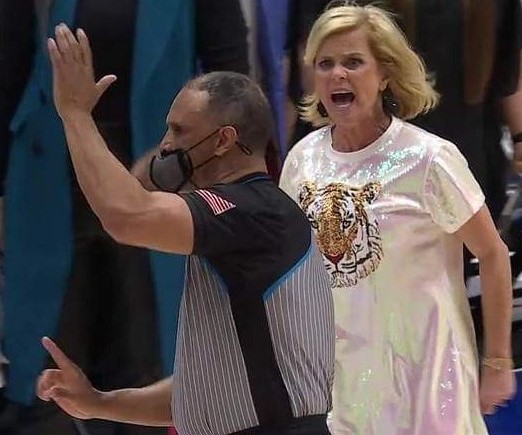
“It is hard to keep younger officials because they haven’t fully developed the communication skills in dealing with coaches and people on the sidelines,’’ Luckie said. “They have to have a lot of confidence in themselves until they learn how to grow on the job.’’
Luckie’s assignments for IAABO Board 47 (International Association of Approved Basketball Officials (boys) and NYSGBOA (NYS Girls Basketball Officials Association) are impacted by the decline.
“Before our numbers were so short, we used to send three guys to a school,’’ he said. “The veterans would work half the JV game with the newcomer, then ref the varsity. Many nights we can only send two guys and they work a doubleheader.’’
“We always want to pair our younger refs with vets so they can mentor them and not have been put in a difficult spot.’’
Modified games remain difficult to staff even though it’s an essential situation for young players to learn the rules and decorum. The weather compounds the issue when a storm forces schools to reschedule games, jamming more into a tight calendar.
Technical fouls, intended as an officials’ tool to corral runaway coaches and players, have risen. You see as many yellow jackets emblazoned with “SECURITY’’ some nights as you do cheerleaders. Their worst-case job is to monitor a few hostile fans who feel entitled to scream or threaten officials.
I chuckled about this thought in light of two recent games on consecutive nights. The varsity girls game was marked by unskilled players falling down and asking for fouls, and a first-year coach who was trying to officiate the game, never mind that two veteran refs were working the floor. We each walked him a few steps back to his bench and explained he was close to a technical (giving up two free throws and possession of the ball). Players always take on the persona of their coach so it was no small wonder that one of his girls dropped an audible F-bomb that my partner penalized.
With the same partner the next night, I walked into my hometown middle school for a modified boys game and spotted my “jury,’’ three guys from my morning basketball game.
The clock hadn’t ticked down 30 seconds when a player reached over the boundary line and dislodged the ball from the passer. Automatic technical.
Sure enough, the player was the son of a morning colleague.
“How could you guys make that BS call in a modified game?’’ the father complained in an email. “Didn’t you hear me chirping?’’
Chirp all you want. We simply enforce the rules. Coincidentally, the rules are governed and modified each year at coaches’ conventions, and they complain the most.
Luckie has reached a crossroads. This probably will be his final season assigning games, which requires mentoring beginners, matching the better refs with crucial games, and coping with ices storms, high winds and heavy snowfalls.
Sometimes he feels like a PSA with his frequent appeals for new members. He is one of the old guard, having joined Board 47 in 1980 and working with local veterans like Mike Valley, Ed Bush, Rick Ahlfeld and Don Petty. Luckie doesn’t work games any longer. He ruptured an Achilles tendon working a playoff game in 2006.
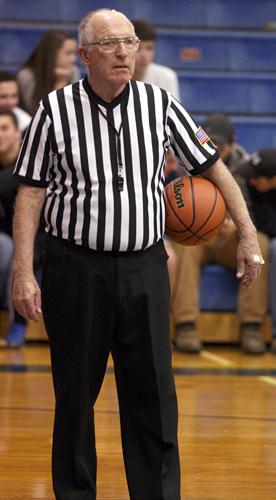
Not everyone can be a warrior like Ahlfeld. He reffed my baseball and basketball games in the 1970s, and he retired two years ago after a 57-year career.

If I stop to feel sorry for myself, working 3-4 games weekly at age 66, I thought of my colleague Randy Lockhart in Florida who was preparing to work a tripleheader — girls varsity, boys JV and boys varsity. You gotta have a lot of spring in 60-year-old legs to run for five hours.
“We have to protect the older officials, not just in basketball but in baseball, softball and lacrosse,’’ Luckie said. “I know they are all facing shortages. We try to envision what it will be like in five years. It could be really difficult to service the teams.’’
Morristown native Jim Holleran is a retired teacher and sports editor from Rochester. Reach him at jimholleran29@gmail.com or view past columns under “Reflections of River Rat’’ at https://hollerangetsitwrite.com/blog/
 Holleran Gets It Write
Gre
LikeLike