
If you have a Walter Mitty imagination, you can dream of German submarines lurking beneath the surface of the St. Lawrence River during World War II, firing on unsuspecting ships or delivering messages and spies along the shores.
A Clayton marina owner recalled as a 10-year-old in 1942 that he witnessed American aircraft sink a U-boat near Carleton Island off Cape Vincent.
Forget it. A diver scoured the riverbed and found no evidence of submarine wreckage. The tale was written off as an urban legend.
The closest any submarine ever reached the North Country was about 700 miles east in the Gulf of the St. Lawrence from 1942-44. U-boats from Germany’s Kriegsmarine torpedoed Allied and Canadian vessels, sinking 23 ships in an attempt to disrupt supply lines to Europe.
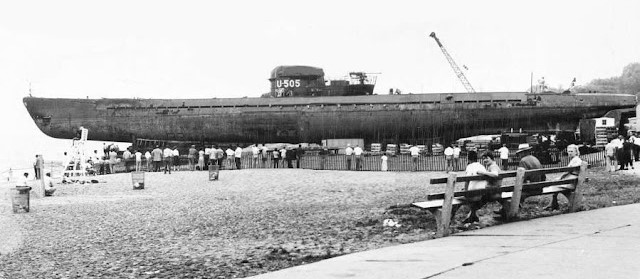
But there have been two sightings of German submarines on the lower St. Lawrence, the last in May 1954 when U-505 was towed past Ogdensburg on its way to a museum in Chicago.
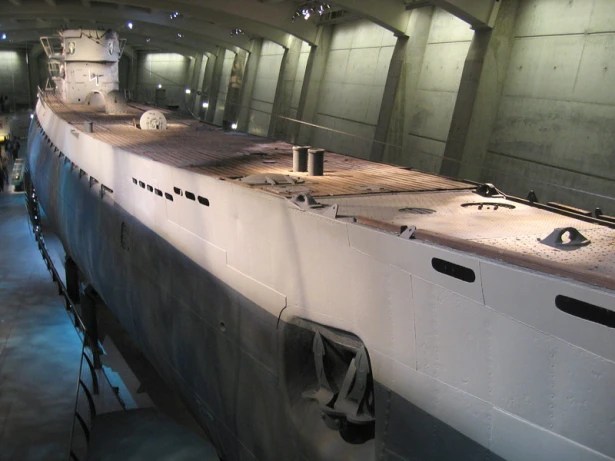
“The thought of a German U-boat being towed past Morristown is kind of interesting,’’ said Thomas Clements, a Morristown native and attorney in Glens Falls. He visited the 250-foot long sub on display at the Museum of Science and Industry and came away impressed.
U-505’s history is fascinating. The keel was laid in 1941 in Hamburg, Germany, and the submarine was completed in 11 months. It went into service in August 1941. Able to travel 20 miles per hour and dive to 750 feet, UC-505 went on a training run, circumnavigating the British Isles, then joined a group of maritime predators off the coast of Africa. U-505 sank seven ships in two patrols before embarking for the northern coast of South America. She almost went down there.
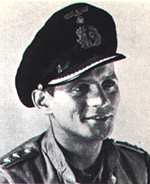
A Royal Air Force patrol plane surprised U-505 on Nov. 10, 1942 off the coast of Venezuela, inflicting severe damage to its deck, hull, conning tower and anti-aircraft gun. Captain Peter Zschech ordered the crew to abandon ship, but technicians figured out how to save the U-boat and it limped back to its home port of Lorient in occupied France.
U-505 spent several months undergoing repairs but French dockworkers, aiding the Resistance, plagued the sub with faulty welds, holes in diesel fuel tanks, and sabotaged radar and electrical systems. When U-505 returned to action in October 1943, it was patrolling the Azores, 900 miles east of Portugal when it was spotted by British destroyers. During a depth charge attack, captain Zschech committed suicide in the control room, shooting himself in the head in front of his crew. The sub withstood the depth charges and returned to port for repairs.
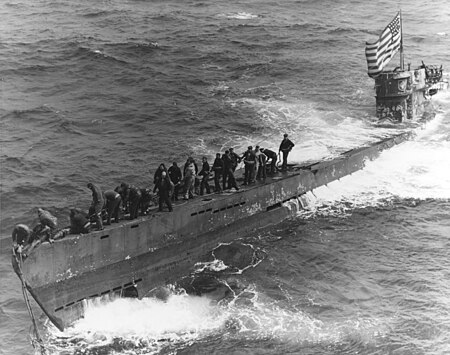
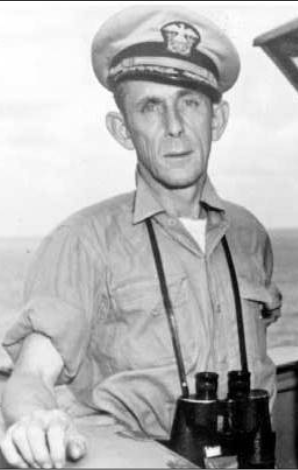
The U-505 met its match on June 4, 1944 off the coast of Mauritania in West Africa. A U.S. Navy flotilla, led by the carrier USS Guadalcanal, spotted it on sonar, attacked with depth charges, and forced U-505 to surface.
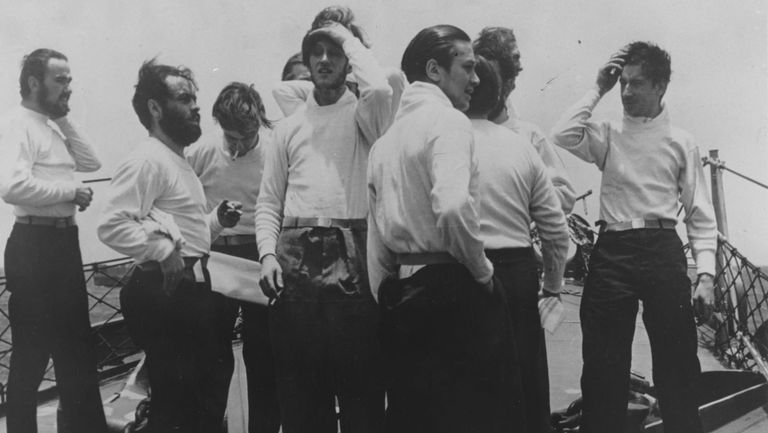
Captain Harald Lange had ordered his crew to open valves to sink the sub, leave the engines running and abandon ship. By the time an eight-man boarding party reached it, U-505’s damaged rudder left it turning in a circle at about 8 miles per hour. The boarders disarmed demolition charges, closed valves and saved the submarine. Eventually, seawater was pumped out and the ship was righted. Another ship plucked the 59-member crew from the sea.
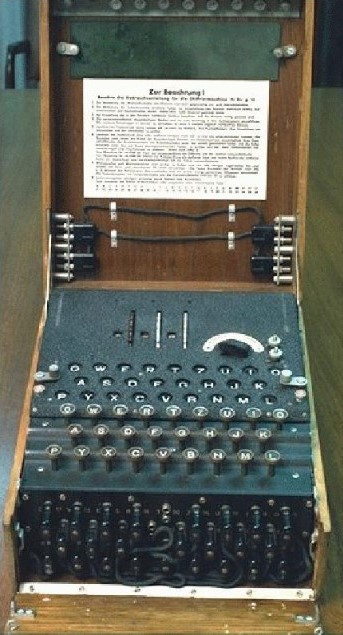
The Navy considered towing the sub to Casablanca in Morocco, but was concerned about German spies. American intelligence wanted the Germans to believe the submarine had sunk ahead of the Normandy invasion two days later. Naval officers had collected navigational charts, code books and an Enigma machine that encrypted messages. The result was that intelligence officers broke German submarine communication codes for the rest of the war.
So the decision was made to tow U-505 to Bermuda and secretly imprison the crew. When Germany surrendered on May 7, 1945, secrecy was abandoned. The U-boat was docked in several East Coast ports to promote war bond sales as the war with Japan continued.
After the war, U-505 was towed to the naval installation in Portsmouth, N.H., then in 1954 was sent to Chicago. The museum had raised $400,000 to save the sub from the scrap heap and build a display. U-505’s last journey covered 3,000 miles, beginning on May 15 under tow from the tugboat Pauline L. Moran. U-505 bobbed along the North Atlantic into the Gulf of the St. Lawrence, passed Quebec City and Montreal, traversed the Cornwall Canal and arrived in Morrisburg, Ontario, on Friday, May 28, escorted by a luxury Chris Craft called the Airbanas.
There were two more coincidences. The tug was captained by Earl Trosino, who led the crew that towed it across the Atlantic in 1944. The Airbanas was visited that Friday by Rear Admiral Daniel Gallery, who had commanded the carrier USS Guadalcanal.
U-505 continued through the Welland Canal, Lakes Erie, Huron and Michigan, and arrived June 26 in Chicago. The 700-ton submarine still needed to be moved 800 feet from the waterfront to its museum berth across six-lane Lake Shore Boulevard on a rail and roller system. Gallery met the sub and directed the move, which took a week. The sub was dedicated as a war memorial on Sept. 25, 1954.
U-505 wasn’t the only German sub to travel the St. Lawrence.
UC-97 was a 185-foot submarine completed in 1918, commissioned into the German Imperial Army, but surrendered to the U.S. Army at the end of the war. It was piloted across the Atlantic, made calls at several ports to hawk war bonds, then was driven down the St. Lawrence to Chicago’s Grant Park in 1919.
The Treaty of Versailles required that all seized German vessels be destroyed by July 1, 1921. So UC-97 was towed out to Lake Michigan and used for target practice until it sank.
Morristown native Jim Holleran is a retired teacher and sports editor from Rochester. Reach him at jimholleran29@gmail.com or view past columns under “Reflections of River Rat’’ at https://hollerangetsitwrite.com/blog/
 Holleran Gets It Write
Well done! Bravo.
LikeLike
Very interesting.. thanks.
cordially yours
LikeLike