
My baseball buddy Lauren and I gathered for our monthly breakfast to whine about injuries on our fantasy teams, talk sports and politics, and plan our next road trip to Cleveland for the Guardians vs. the Phillies.
Each month, the conversation turns to refereeing. I relay stories from high school lacrosse fields and basketball gyms; she responds with tales of the softball diamonds.
She leaned forward in the booth, breathed deeply and set her eyes before she issued the invitation.
“So, I’m working a game in Penfield tomorrow and I know you’ve always wanted to see a game. Would you come?’’
“Sure,’’ I replied without hesitation.
The ensuing conversation confirmed my suspicion. Her ask was part invitation and part plea for support from a brother official. This breakfast had become officials’ therapy — a session where we talk game-management strategy and situational reffing.

“Are you nervous?’’ I asked.
“I’m always nervous before a game,’’ Lauren responded.
“There’s nothing wrong with being nervous,’’ I said. “It means you respect the game and respect the process.’’
I wish all the exuberant players, instructive coaches and casual fans – along with the occasional griping bench jockeys, overzealous parents, know-it-all loudmouths and angry dads — could listen and grasp our heartfelt conversation.
She has heard the worst:
The next time you complain about the refs, call them arrogant or incompetent, think of this third-year high school softball official, who had already achieved varsity status, worrying about a 13-14-year-old girls game. Lauren was assigned to work home plate, always a wellspring of complaints from the umpires in the stands who think they see close pitches better from 75 feet than Lauren can from 3 feet.
She has heard the worst:
“C’mon blue, you’re killing us.’’
“That was clearly a strike.’’
“Are you telling me you’re certified?”
But she realizes barbs like those are the exception. She remains committed to working on behalf of the girls in uniform.
As our breakfast chatter continued, I shared some of my accumulated blarney from reffing youth baseball five nights a week throughout high school, officiating high school lacrosse and basketball for the past 15 years, even being F-bombed by a Special Olympian.
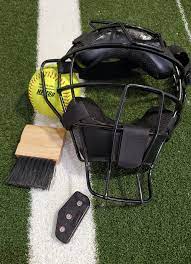
“The one great thing about getting older, and probably crankier too, is your BS Index narrows,’’ I told Lauren, holding my thumb and index finger within a quarter-inch.
There is no actual index, just an intolerance for unsporting behavior and a commitment to see that players play, coaches coach, and nobody ruins their chance to compete. The longer you ref, the less you are willing to ignore.
“I’ve settled on two good lines when fans and coaches are crossing the line,’’ I said. “The first is ‘Cheer for your team.’ The second is ‘It’s hard to watch from the parking lot.’ ’’
If you miss those two warnings, all that’s left is the nuclear option. Goodbye.
Disagreements and arguments have been a part of baseball and softball long before 1908 when Katie Casey from Take Me Out to the Ball Game told the umpire “he was wrong, all along, good and strong.’’ Think of Baltimore Orioles manager Earl Weaver, his hat on backward, screaming nose-to-nose at an umpire while the veins popped out of his neck. It happened so often it became accepted.
Lauren lamented the youth coaches who create unfair expectations, telling young players that they are destined for Division I college sports. I looked it up. Pick a sport. High school players have a mere 2 percent chance.
Most youth coaches are drafted by other parents because of their knowledge base. But few have ever taken a coaching class that is required at the high-school level. That led us to Lauren’s tournament game.
On Saturday morning, I went out to observe her work the plate, bringing my background knowledge as a player, son of an athletic director, sports editor and hard-core baseball fan, the guy who watches 150-plus Guardians games per season.
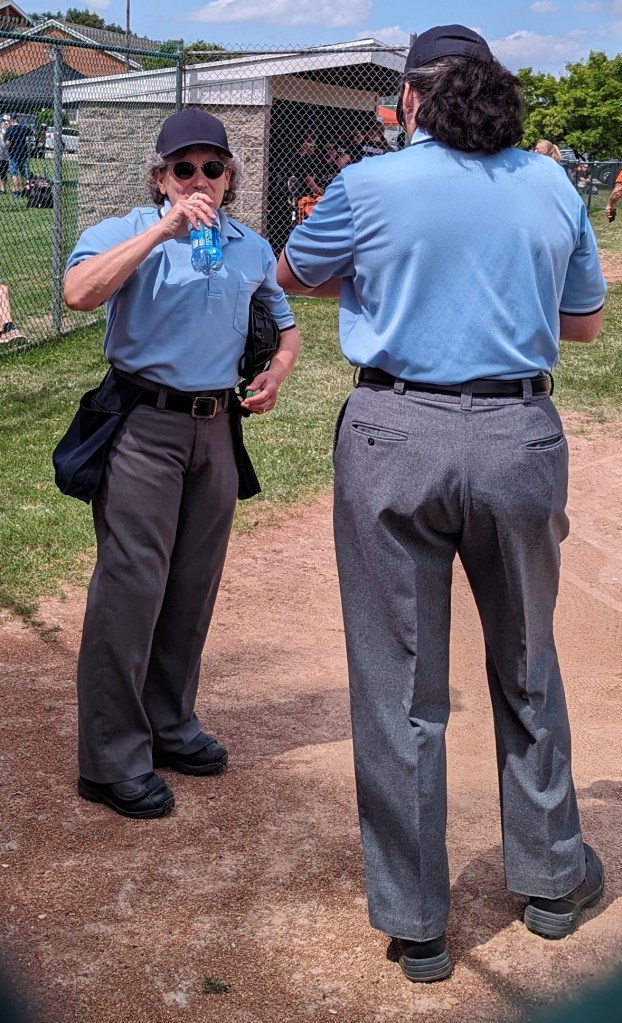
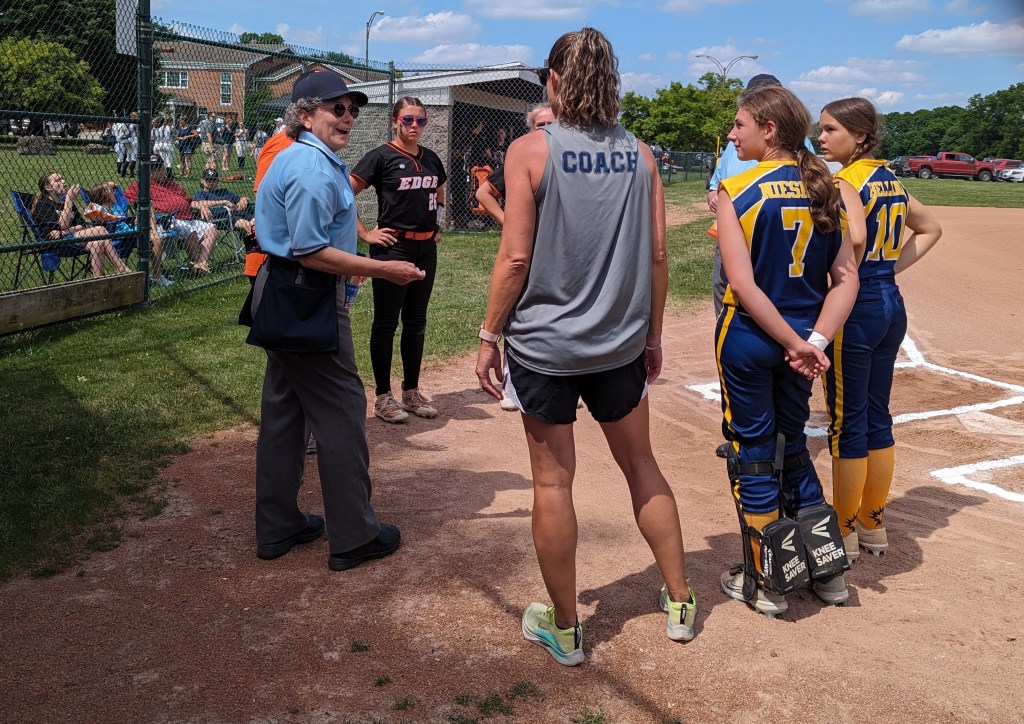
While Lauren and her partner Catherine waited for their 13-14-year-old game to start, the 15-16 contest reached its climax. It was tense.
The manager/third-base coach, thinking he was motivating his team, was calling out batters’ names while pitches were zipping toward the plate. It was distracting and ratcheted up the tension. Dads were giving batting instruction from their lawn chairs. The infielders were so tight they committed errors on two grounders that fueled a walk-off loss. Lauren’s high school colleagues worked the game effortlessly, but I plainly could see why she carried such a nervous respect.
Before Lauren’s game began, it was clear this was game would be for keeps too. An ATV dragged the skinned infield. The batter’s box and foul lines were meticulously rechalked. A whole new village of pop-up tents and lawn chairs circled the field.
Lauren ran the coin flip to see which team got the last at-bats. Her nervousness disappeared. She managed a consistent strike zone and made an authoritative call on a close play at home. She has heeded the constructive criticism from varsity officials who told her told her to be louder and an octave deeper with her voice.
“I think I am learning to use my big-girl voice,’’ Lauren said. “I don’t have your so-called big, fat Irish mouth, but I am getting better.’’
“I heard a little chirping about my strike zone, but I don’t care. I love doing this and I just do it.’’
All the nervousness had disappeared. She was in charge. Now I know why her softball supervisor is urging her to take up basketball.
“Nope,’’ she said. “I’ll stick with softball and take the winter off.’’
Morristown native Jim Holleran is a retired teacher and sports editor from Rochester. Reach him at jimholleran29@gmail.com or view past columns under “Reflections of River Rat’’ at https://hollerangetsitwrite.com/blog/


👍👍🍀🍀
LikeLike