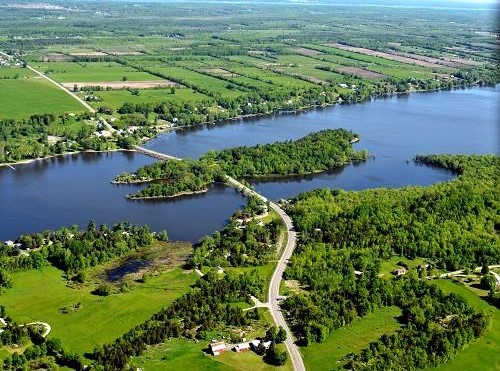

When Morristown Gateway Museum officials decided to assemble an exhibit about neighboring Black Lake, they didn’t have to search far to find a prized artifact. It was just steps away.
“I have to smile when I think of the ice sailing equipment that we found in the basement of the museum,’’ said curator Hallie Bond. It will be one of the prominent exhibits that visitors will see at “The Small Fish: Life and Leisure on Black Lake,’’ which opens from 4-6 p.m. today at the museum.
The Black Lake exhibit will be the sequel to “The Big Fish: Making a Living from the River,’’ the successful show that looked at St. Lawrence River fishing through the careers of two prominent anglers – muskie guide Jim Evans and sturgeon fisherman Allan Bogardus.
Bond described the ice boat rig gathering dust in the basement.
“It was built and used by Hubert Richardson in the (last mid-century),’’ she said. “The iceboat is a DN model, the most popular iceboat in the country since the 1940s, rigged with a mainsail made from a green canvas tent. The mast is a tamarack tree trunk. With it, we found a skate sail made from feedsacks.’’
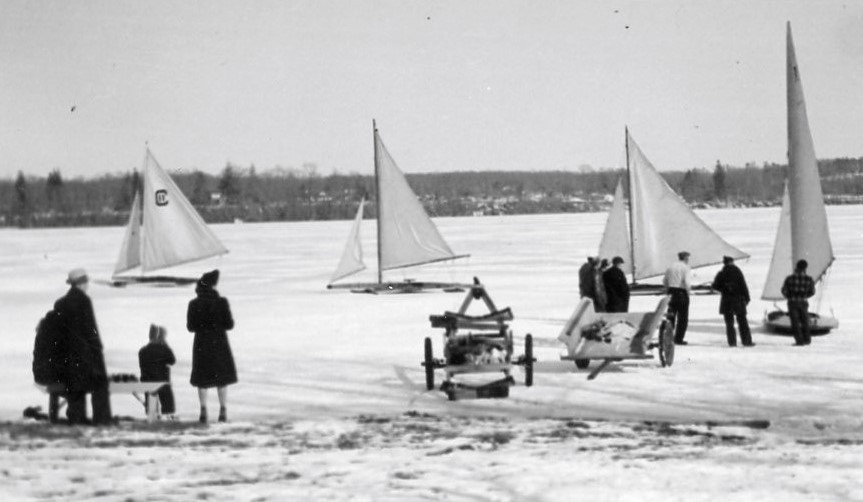
This model could not compete with the sleek, new-age racers that zip along frozen sheets of ice around Great Lake states, Finland and the Netherlands. But it recalls a homespun recreation along Black Lake, which was left behind about 12,000 years ago when the glacial ice sheet retreated northward into Canada.
The exhibit is much more than an ice boat.
“I hope visitors will come away with an appreciation of the rich lives lived by the folks around Black Lake in the era when the focus was still local,’’ said Bond, retired from Adirondack Experience, the Museum at Blue Mountain Lake. “I was also impressed by the variety of ways people had of making a living and enjoying themselves — all very place-based. Fishing, trapping and hunting supplemented dairying and farming for a long time, and people entertained themselves with calico parties and squirrel hunts (you’ll have to visit the exhibit to find out what those are).’’

“Black Lake was rather isolated in the days before the automobile, but by the 1920s, tourism became the main supplement to the farm income. Now, tourism has become the mainstay of the economy.’’
The shallow lake was always known for its fishery and cottage rentals, but in recent years the tourism has broadened with businesses such as Bella-Brooke Vineyard.
Bond left the Adirondack Experience in 2012, and in retirement has curated small shows around the North Country. Gateway Museum board members Chris Coffin and Annemarie FitzRandolph spotted Bond’s work at the Chippewa Bay Maritime Museum, which Allan Newell opened in 2015, and that led her to The Big Fish exhibit in Morristown.
Research for the Black Lake exhibit began last winter when Bond began culling through old newspapers and interviewing locals.
“We did convene a fascinating roundtable discussion with Mel and Janet McLear, Larry Kring, Mike Warren, Jay Carter and Gary Alford to gather stories and questions. I’m confident that we’ve established the framework of the Black Lake story; our hope is that now people will help us fill it out.’’
One of the stories she gathered was about Mel McLear’s grandfather, a fur broker.
“He bought from a network of trappers all around the lake and off into the Adirondacks, warehoused the pelts on his farm, and sold them on to a furrier in New York City. I loved the picture Mel painted of his grandfather hanging fur coats all over his car and driving it in North Country parades to advertise — he said grandpa would be surrounded by local women at the end of the route who wanted to put in their orders.’’
Bond said the key to assembling any exhibit is to focus on local men and women within their environment.
“I usually find that, as on Black Lake, the location molds the people. All that is changing rapidly now—or started changing with the automobile, TV and radio, and on into our present communications technology. The world is becoming more homogeneous—and less interesting, to my mind. That’s why I love studying history. It makes each place unique.’’

The Morristown Gateway Museum relies almost entirely on volunteers and donations from visitors, said Coffin, a retired broadcaster. He credited FitzRandolph, a retired school administrator, for applying her organizing skills to the project.
“She has enormous energy and willingness to use her skills for the Museum and for other community projects.’’ Coffin said. “She’s a strong project coordinator and has organized the new Black Lake exhibit. She’s also generous with credit, understating her role and recognizing others.’’
The Black Lake opening is aligned with the summer tourism season, whose unofficial kickoff is the July 3 fireworks show followed the next day by the parade and firemen’s activities. You can find more information at https://www.morristowngatewaymuseum.org/
Morristown native Jim Holleran is a retired teacher and sports editor from Rochester. Reach him at jimholleran29@gmail.com or view past columns under “Reflections of River Rat’’ at https://hollerangetsitwrite.com/blog/

