Throughout history, a cast of characters has emerged that did notable work but received little credit.
Long before the Artemis moon mission, mathematical genius Katherine Johnson calculated spacecraft trajectories, launch windows and emergency routes for the Mercury and Apollo space programs 65 years ago. But the credit was given to a horde of Caucasian engineers with nerdy eyeglasses and pocket protectors.
Claudette Colvin, 15, refused to give up her seat on a Montgomery, Ala., bus to a white woman. Nine months later in 1955, the NAACP initiated the same practice – with publicists and lawyers waiting – for Rosa Parks.
Actress Hedy LaMarr was known in the Hollywood gossip rags for her 1930s film stardom and six marriages, but she moonlighted as an inventor. Her work in radio frequencies aided the Allies, and eventually became the basis for Wi-Fi, Bluetooth and GPS technologies. She got little credit.
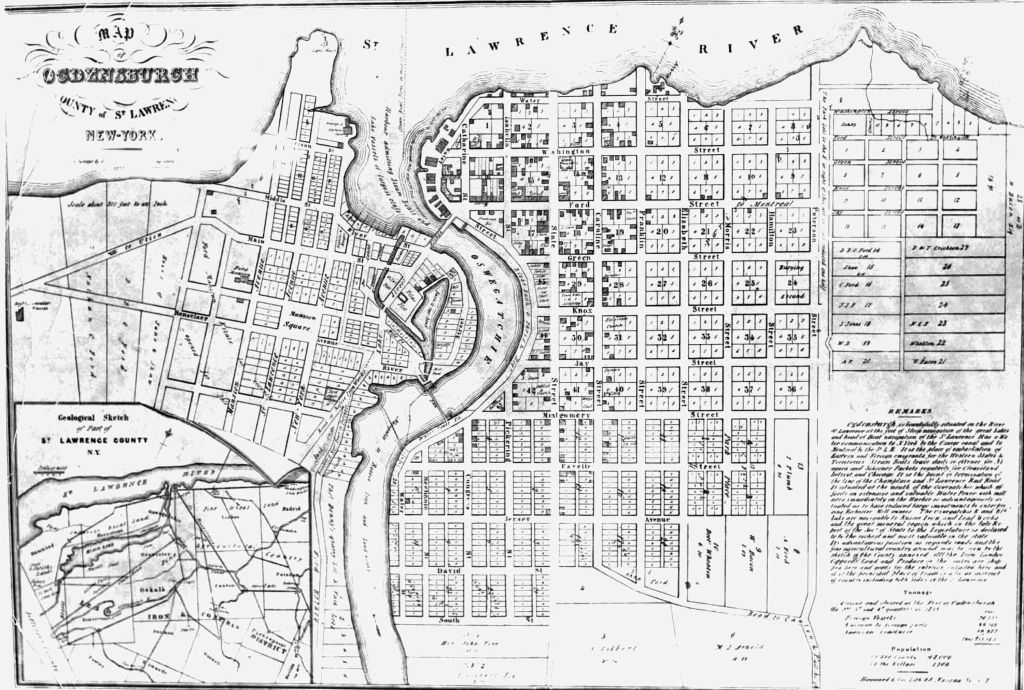
Ogdensburg, or Ogdensburgh, had a similar situation. The village was named for Samuel Ogden, a land speculator who accrued his wealth running an iron works in New Jersey.
“We should be living in Fordville,’’ wrote retired newsman Ted Como for the Fort de la Presentation website, noting that Ogden “never set foot here.’’
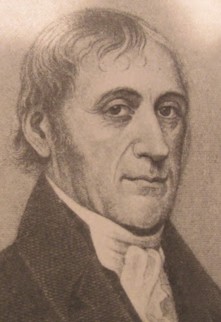
Ogden, a former colonel in the New Jersey Militia during the Revolutionary War, used his family and military connections to George Washington in the 1790s, to learn that North Country acreage would be sold for settlements. Ogden snapped up the towns of DeKalb, Gouverneur, Hammond and Oswegatchie from fur trader and land speculator Alexander Macomb in 1792, then purchased another tract that included Fort Oswegatchie at the confluence of the Oswegatchie and St. Lawrence rivers.
His agent, Nathan Ford, arrived in August 1796 and began to repair the fort, laid out streets, commissioned a grist mill, recruited settlers and saw that Ogdensburg was the first county seat.
Ogden had streets named for his wife, Euphemia (now State Street) and daughters Catherine, Isabella, Caroline and Gertrude (now Franklin). Ford was the namesake for Ford Street and Ford Avenue.
“It is because of Ford that Ogdensburgh became the center of business and government in the newly formed St. Lawrence County,’’ wrote city historian Julie Madlin. “He was a judge from 1802-1820 and simultaneously served as chief justice for the county, supervisor of the Town of Oswegatchie and de facto “mayor” of the village of Ogdensburgh … and nothing escaped his notice.’’
Ogdensburgh’s status was changed to a city on April 27, 1868, and the “h’’ was dropped from the name.
Ford’s legacy might have become Heuvelton. Originally it was called Fordsburgh in 1802, but around 1820 the town’s name was changed to honor Van Heuvel, a prominent landowner and settler.
GOUVERNEUR and MORRISTOWN
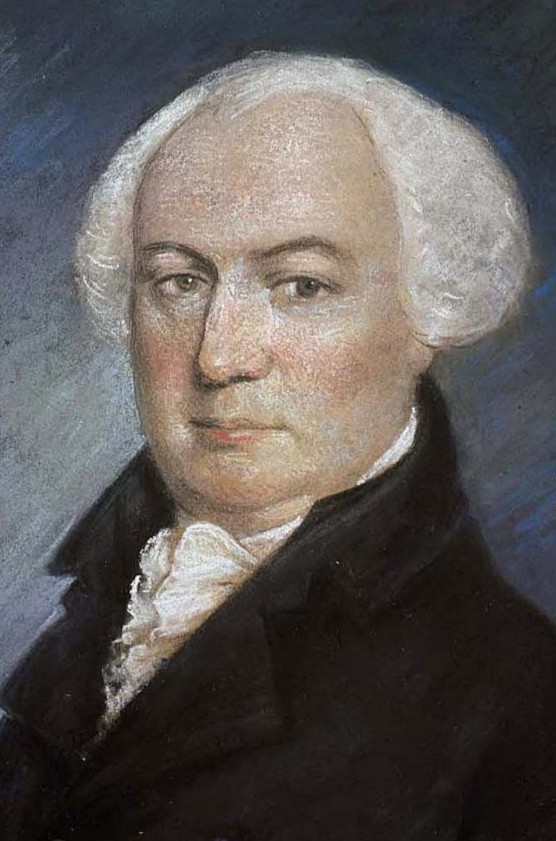
Ogden’s connections were evident around St. Lawrence County. His brother-in-law, Gouverneur Morris, a signer of the Declaration of Independence and author of the Preamble to the Constitution, bought up land around the North Country, including a parcel known as Cambray along the Oswegatchie. It was renamed Gouverneur.
He also bought land from Cambray extending northward to the St. Lawrence in what is present-day Morristown, then Hague. Ford’s brother, David, born in Morristown, N.J., laid out a village on the hillside overlooking the St. Lawrence. Hague was renamed for Morris.
CANTON
This part of St. Lawrence County was inhabited by the Kanienkehaka, “people of the flint.’’ These Mohawks were part of the Iroquois Confederacy. White settlers arrived in the 1800s. Canton was split off from the town of Lisbon in 1805 and briefly called New Cairo. It was named for Canton, China, the port city now called Guangzhou. The village government was established in 1845.
HAMMOND
The village was incorporated in 1827 from parts of Rossie and Morristown, and named for a landowner from New York City, Abijah Hammond. It was settled by Scots who built several stone houses, but its first and most notable resident (1812) was a hermit, William McNeil, who lived in a cave near Chippewa Bay.
LISBON
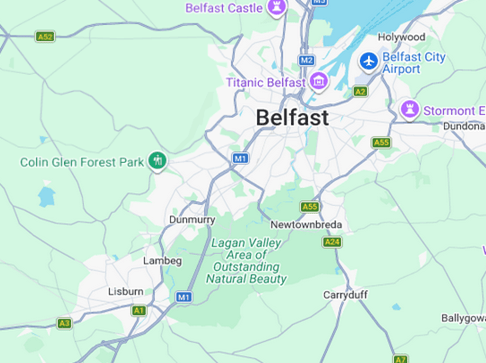
European settlers named the town after a village in Northern Ireland called Lisburn. You’ll find it southwest of Belfast. Town historian Dan Buckley said pre-1800s maps show variations of the spelling but Lisbon was adopted when the town was officially formed in 1801.
MASSENA
The Mohawks were the first to confer names on this area. They knew it as Kanaiatarowenenneh, or “the big waterway,” because the Grasse and Raquette Rivers joined the rambling rapids of the St. Lawrence. Nearby, the Mohawks named Akwesasne “the place of the partridges.’’ Lastly, they referred to the sulphur mineral springs, a popular tourist destination in the 1800s, as Kanaswastakeras, or “the place where the mud smells bad.” The springs were located where the railroad tracks converge with South Main Street.
White settlers from Vermont named the village after one of Napoleon Bonaparte’s generals, Andre Massena. Some wanted a more patriotic name and promoted Jefferson, but a town in Schoharie County had chosen that name. Americus and Liberty never gained traction so Massena stuck.
The Mohawks stuck with their original name, Nikentsiake, meaning “where the fish live.”
NORWOOD and POTSDAM
Norwood was known as Raquetteville because of its spot along the Raquette River, then Potsdam Junction because of its position along the Northern Railroad in the 1850s. Residents wanted an independent identity from Potsdam so they renamed the village Baldwin, after a prominent landowner, then settled on Norwood, believed to be lifted from a novel by Henry Ward Beecher.
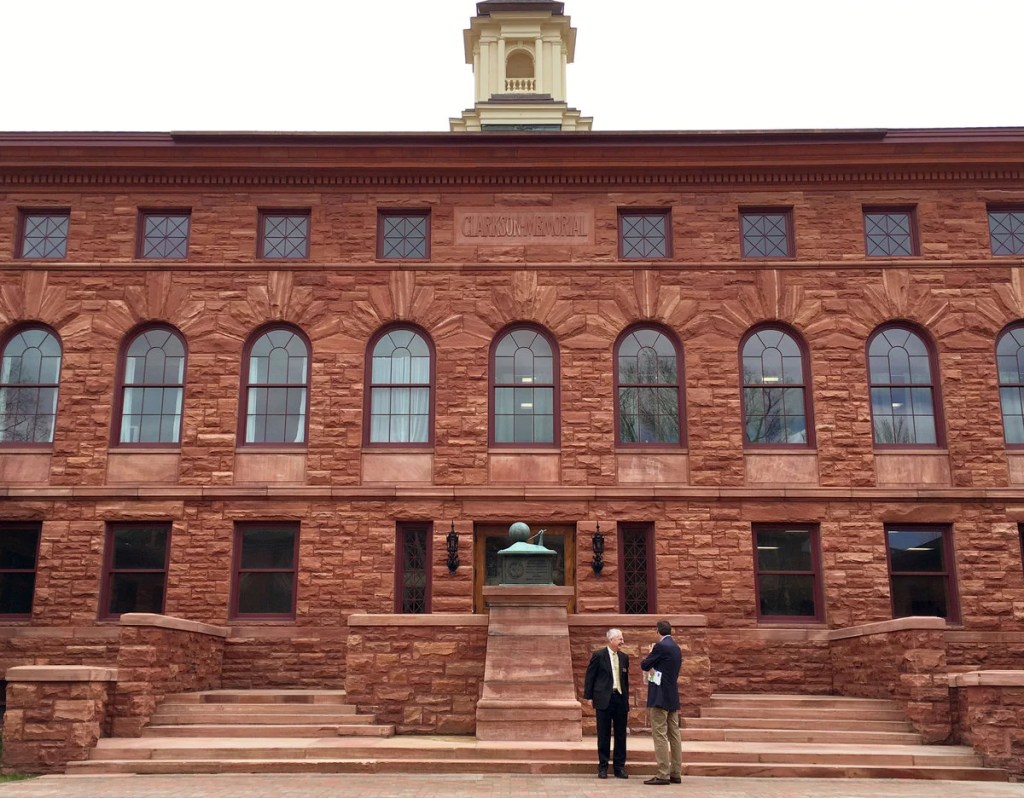
Potsdam was incorporated in 1806 and county commissioners named it for Potsdam, Germany, because both sites were known for their red sandstone quarries. You’ll find Potsdam sandstone outcroppings along the Racquette River.
Morristown native Jim Holleran is a retired teacher and sports editor from Rochester. Reach him at jimholleran29@gmail.com or view past columns under “Reflections of River Rat’’ at https://hollerangetsitwrite.com/blog/
 Holleran Gets It Write