
It’s difficult writing an Ogdensburg-themed column from 182 miles away. Rule #1 — You live and die by phone calls and emails. I don’t have the luxury of dropping in at an office or knocking on a door. Forget driving; the time and cost are prohibitive.
It became worse over the last month; gas rose $1 per gallon. Rule #2 — Avoid blaming politicians. Readers can get a steady diet of politics anywhere; I’m supposed to provide an alternative.
So I’m devoting this piece to the ones that got way – the big fish who wouldn’t take the bait when I email or called. Still, they have good stories to tell.
THE GOGOLAK BROTHERS
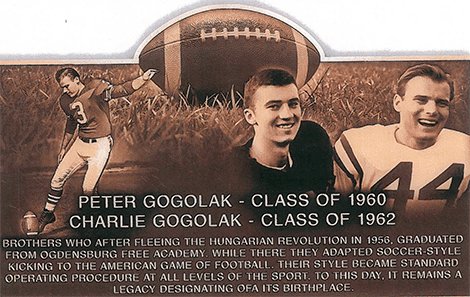
Ogdensburg became the birthplace of the soccer-style kicking movement in the NFL in the 1960s. Before Pete Gogolak came along, all kickers used a straight-on approach.
Most wore squared-toed cleats. Think offensive tackle Lou “The Toe’’ Groza with the Cleveland Browns for 21 seasons (1946-67) or Tom Dempsey, born without toes on his right foot nor fingers on his right hand. He kicked a record 63-yard field goal in 1970 for the New Orleans Saints, a standard that stood for 43 seasons.
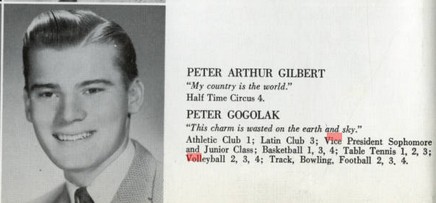
However, the soccer-style method was considered revolutionary when it was incubated on the OFA football field in the late 1950s and early 1960s by the Gogolaks. Pete (15) and Charlie (12) arrived from Budapest, Hungary, in March 1957. Soviet troops had crushed a rebellion in Hungary so their father, Janos (John), and mother Sari, 6 months pregnant, decided to flee overnight. They led their boys 20 miles through the woods to the Austrian border. Upon reaching the United States, Janos, a physician, eventually landed a position at the St. Lawrence State Hospital. Sari delivered a son, Janos, in Saranac Lake in February 1957.
1962 yearbook photo
At OFA, the boys adjusted to American culture and learned English. Pete had played for the Hungarian junior soccer team but was big enough to play defensive end and linebacker for the Blue Devils. One rainy day during an indoor practice, he tinkered with his sidewinding approach when coach Bill Plimpton noticed.
“He asked him to go outside and take a try at kicking a football, and he kicked it out of sight,’’ recalled his holder, OFA quarterback Steve Munn, in a story in the Syracuse Post-Standard.
It led Pete to a successful career at Cornell before he joined the AFL’s Buffalo Bills for the 1964 season. The next season, Pete tripled his salary by jumping to the NFL’s New York Giants, a move that many insiders said hastened the merger between the rival leagues.
Brother Charlie succeeded Pete as the OFA placekicker and earned All-American honors as Princeton’s placekicker.
Charlie kicked for the New England Patriots and Washington while Pete stuck with the Giants from 1966-1974. There paths crossed four times.
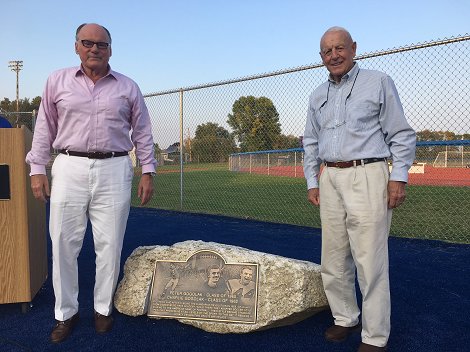
Their parents joined 62,000-plus fans for the first matchup at Yankee Stadium on Oct. 16, 1966. Charlie converted a 37-yard attempt as Washington built a 10-0 lead, but two short field goals by Pete and a late touchdown rallied the Giants to a 13-10 victory.
Pete held family bragging rights, winning three of four games. Holleran went 0-2 on interviews.
THE MARCH MADNESS GUY
If you’re a college basketball fan, you’ve heard the brass section and driving percussion of the NCAA March Madness theme song during every timeout on CBS. It’s been entertaining fans since 1992. That theme has roots in Potsdam.
It was written by Bob Christianson, a composer, arranger and keyboard player who graduated from SUNY Potsdam’s Crane School of Music in 1972. You can find it along with other award-winning sports themes on his webpage at https://bobchristianson.com/
Per writer Gabe Oppenheim, Christianson was introduced by his keyboardist father to the instrument at age 6. By 12, Christianson was composing and arranging music, playing in rock bands in Greenwich Village, and mingling with the likes of Bob Dylan and Jimi Hendrix.
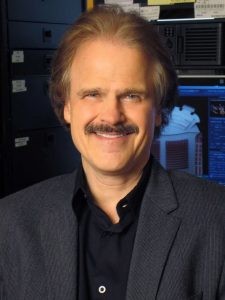
That led him to Potsdam to pursue an undergraduate degree in organ, but he was best known for his keyboard talent in the local band “Tin Penny.’’ After graduation, his next stint was in Ann Arbor at the University of Michigan, pursuing a graduate degree in composition. Christianson needed only to write his thesis when he quit to take a musical theater gig in New York. It led to work around New York’s vibrant music scene.
He composed music for Sex and the City and earned an Emmy nomination for a PBS special – “A Christmas Carol—The Concert.’’ He conducted the “Saturday Night Live’’ band and arranged music for “The Late Show with David Letterman.’’ He recorded with heavyweights like Aretha Franklin, Judy Collins and Diana Ross.
Christianson and other composers were approached by a CBS executive in 1992. He conducted a one-week weepstakes for theme music to find them music for basketball telecasts. Christianson told Oppenheim he submitted about five concepts.
“I tried to write pieces that evoked the energy of the game,’’ he said. “It’s very up, very fast — just like the game, changes directions all the time.” His work was selected and has endured with minor alterations.
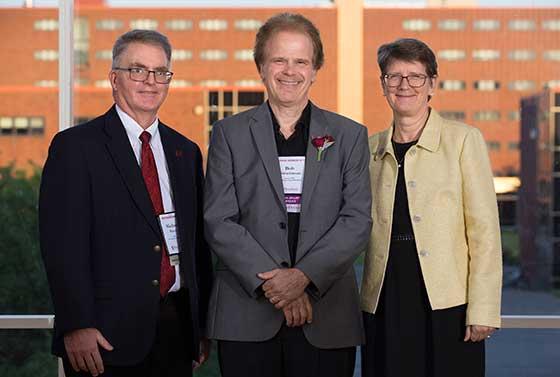
Christianson didn’t forget his roots. He returned to Potsdam in 2017 to receive the Alumni Association’s 2017 Minerva Award during College Reunion Weekend.
Holleran airballed the interview request.
Morristown native Jim Holleran is a retired teacher and sports editor from Rochester. Reach him at jimholleran29@gmail.com or view past columns under “Reflections of River Rat’’ at https://hollerangetsitwrite.com/blog/
 Holleran Gets It Write