
My favorite month is here. The snow is melting on the golf courses. Baseball’s regular season begins before the calendar turns its page. Yet the biggest happening arrives March 17 – St. Patrick’s Day.
There will be a moment in the coming days when I’ll meet someone decked out in green clothing or sporting an Irish flag painted on their cheek, proclaiming their Irishness. When I inquire about their family roots, I often get: “I’m not sure, but my grandfather told me.’’
I’ll be encountering fake Irish accents, radio ads chortling on about “faith and begorra,’’ and enough green beads to fill a Walmart.
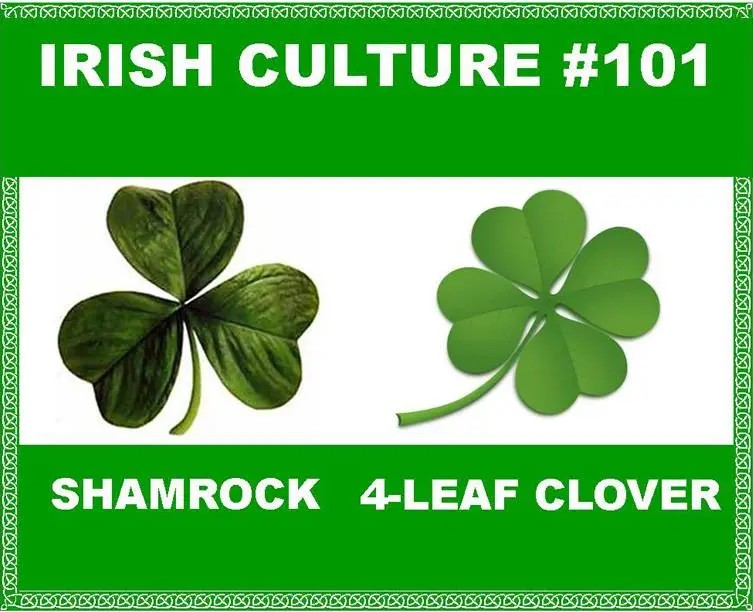
My favorite is the confusion between the shamrock and the clover. Just to set the record straight, a clover has four leaves and represents good luck. The shamrock (seamrog in Irish) has three heart-shaped leaves and represents good luck too but identifies more with national pride and Irishness.
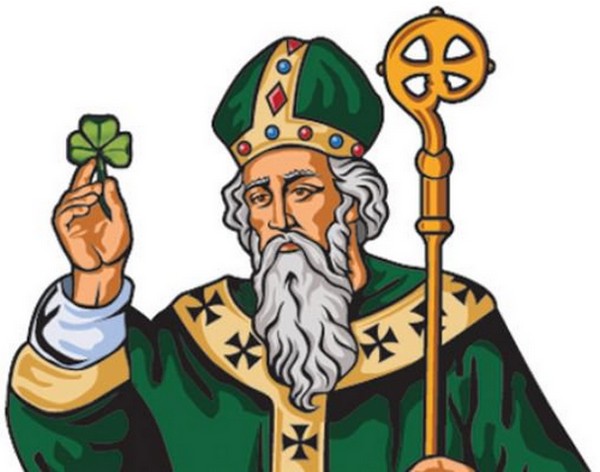
Legend has it that St. Patrick used the shamrock’s three leaves to explain the Holy Trinity – Father, Son and Holy Spirit – to the pagans he recruited to Catholicism in the Fifth Century.
I never thought much about the clover vs. shamrock debate until my friend John from County Kerry teased me one day after Mass.
“Hey Mr. Newspaperman,’’ he began, still brandishing the accent that he brought over 60 years ago from Tarbert. I knew he was about to give me the business.
“You know, your fellows at the newspaper don’t know the difference between a clover and a shamrock. They keep inserting clovers in the obits for Irish people. When my time comes, I don’t want a GD clover. I want a shamrock!’’
Point made. It illuminates how you can tell the Irish from the Plastic Paddys, a derogatory term for Irish wannabes. My life is filled with reminders of my heritage. I won’t require a DNA swab anytime soon .
NAMES
A popular joke: You know you’re Irish if you have a sister Mary or a cousin Kathleen or any combination of the two.
Hmmn? I have a sister Mary Nora, a spouse Mary Frances, and a daughter Kathleen. My grandfather, father and brother were all named Francis.
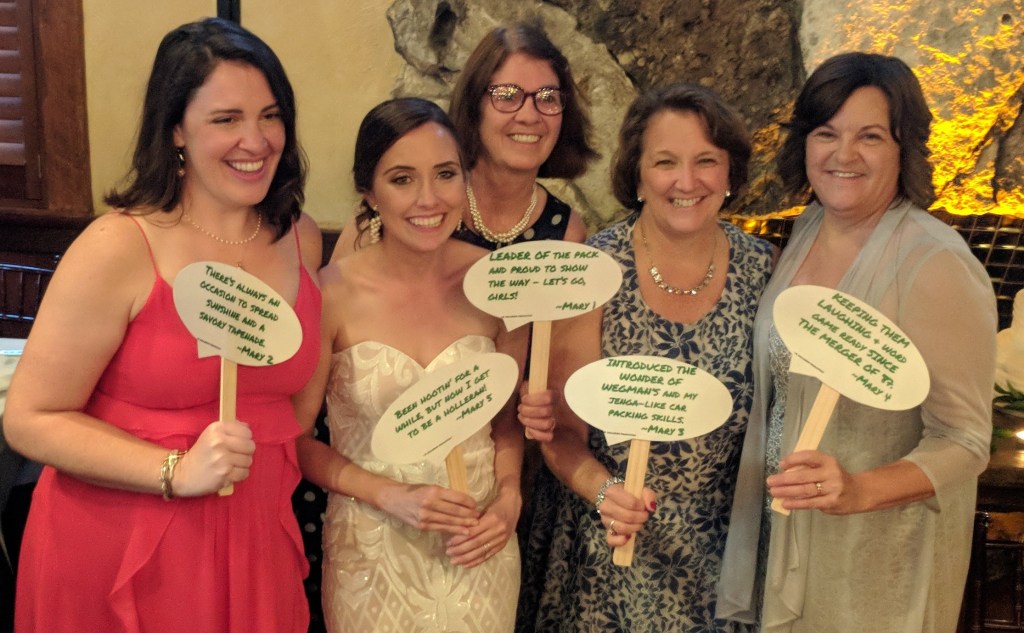
My mother Eileen made a joke by numbering all the Marys in the immediate family – 1. Her daughter Mary Nora; 2. Granddaughter Mary Brigid; 3. daughter-in-law Mary Frances; 4. daughter-in-law Mary Jo. After Eileen passed, we nicknamed her grandson’s spouse No. 5 — Mary Patricia. She quit counting before she reached the Rosemarys and relatives with the middle name of Mary.
Just for the record, my paternal grandmother was Mary Agnes McCann, and I have a sister Maureen, which in Irish translates to “little Mary.’’
TRADITIONS
My father, Francis, could not pass a Catholic church or a cemetery without blessing himself. As soon as the family station wagon passed St. John the Evangelist Church in Morristown or Notre Dame near Hepburn Hospital, his hands were off the steering wheel for the sign of the cross. It was handed down from generation to generation. I do it too.

Many of us think we can sing. The urge to sing rises in proportion to the amount we celebrate (drink). My daughter with Down syndrome doesn’t need any prompting; she sings each year at our St. Patrick’s Day bash, always held on the 17th regardless if it’s a weeknight. When the notes rise, Katie’s off-key rendition of When Irish Eyes Are Smiling goes sideways, yet she still she manages to earn a thunderous ovation each year. I wish I was afforded such grace.
That we serve corned beef at our party fits with tradition. Struggling American Irish opted for cheap cuts of brisket over pricier cured pork and a tradition was born. We serve about 35 pounds each year.
GENETICS
I think we Irish are incapable of forgiving. I recall from fifth grade the jerk nicknamed Icky who punched me. I disdain and dismiss every boss that treated me condescendingly. I am irritated by every coach who tried to referee the game rather than coach his team.
“We’re Irish,’’ my father once said. “We remember anybody who ever pissed us off.’’
So when I toured Northern Ireland last fall, I was miffed when the Earl of Erne explained his family’s hardships of running an estate while managing its holdings and tenant farmers.
I wanted to interrupt his presentation at Crom Castle and protest how the British shipped grain and livestock out of Ireland during the Great Hunger – you may know it as the Potato Famine of the late 1840s. The Penal Laws prohibited Catholics from owning land, voting and practicing their religion. Alas, I kept my big fat Irish mouth shut.
The Great Hunger led 1.5 million to 2 million Irish to flee for North America and Britian. That’s how my father’s family arrived.
KNOW YOUR COUNTY
The passage to cities on the Eastern Seaboard was double or triple the cost of going to Canada. In the 1840s, Patrick Holleran from Ballina undoubtedly passed through Grosse Ile, the quarantine station for Quebec City, then traveled to the Rutland, VT, area to work as a stonecutter.
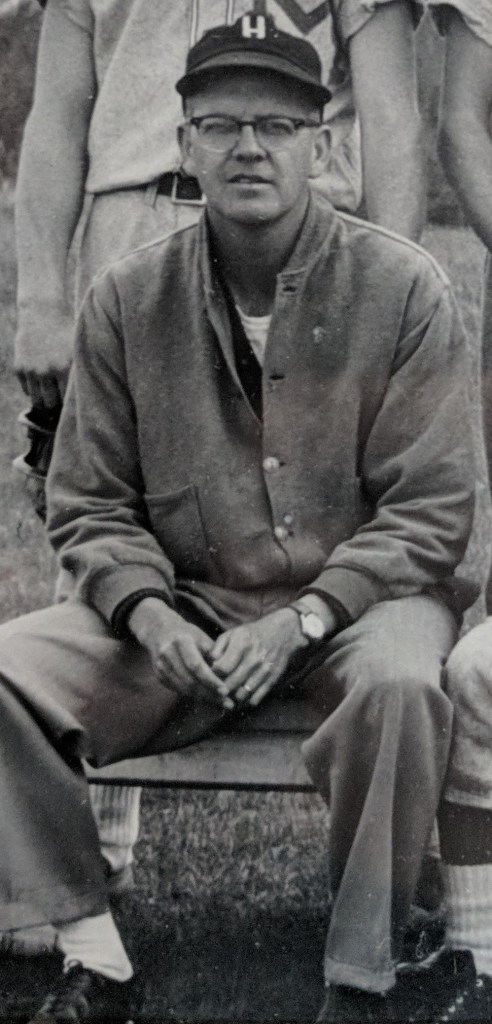
Eventually, my grandfather worked at Remington Arms in Ilion, NY, and his son Francis landed in Morristown in 1950 to coach three sports and teach physical education.
My maternal great-grandmother, Anna McNiery, arrived as a 14-year-old from Cooraclare, County Clare, in the 1880s, then met a farm laborer from Germany. He was one of five who emigrated, leaving nine brothers and sisters in Roth, Bavaria.
Big families once ruled the Irish. Growing up I had 20 first cousins on my dad’s side and at least 43 on my mom’s side.
My checklist – blue eyes, pasty skin, and every story I tell runs long. No need for a DNA test.
Morristown native Jim Holleran is a retired teacher and sports editor from Rochester. Reach him at jimholleran29@gmail.com or view past columns under “Reflections of River Rat’’ at https://hollerangetsitwrite.com/blog/
 Holleran Gets It Write