
I see this online intermittently or I hear it on sports talk shows when I’m station hopping.
The commentator, obliged to fill his gig with commentary, asks his audience: “Name your Mount Rushmore of … .’’
You can complete his question. Greatest living baseball players? Greatest Nobel Peace Prize winners? Greatest U.S. presidents?
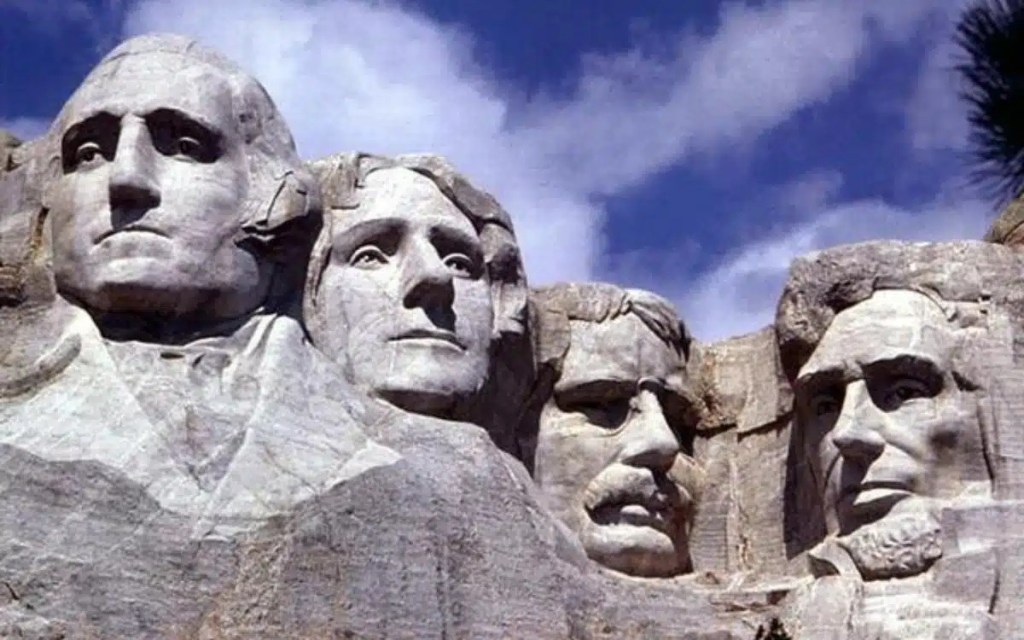
What makes this difficult is that you can only select four iconic figures, similar to the Black Hills monument in South Dakota memorializing George Washington, Thomas Jefferson, Theodore Roosevelt and Abraham Lincoln.
If this were the greatest North Country sports figures, Lisbon native Rick Carlisle might lead the list. He topped 1,000 points in high school, reached the Final Four with Virginia, won an NBA championship with the Boston Celtics, coached the Dallas Mavericks to the title in 2011, and masterfully guided the underdog Indiana Pacers to the Finals this season.
But what about Ogdensburg? I consulted current and past Journal editors Matt Curatolo and Jim Reagan, city historian Julie Madlin and tossed in my limited sense of local history to compile this list:
Frank Augsbury, entrepreneur
Major General Newton Martin Curtis, Civil War captain and congressman from DePeyster
Sally James Farnham, sculptor produced war and cemetery monuments
Nathan Ford, founding father of Ogdensburgh
Benjamin Forsyth, lieutenant colonel in U.S. Army during War of 1812 who led raids on Brockville
Marion Sanger Frank, suffragist
Louis Hasbrouck, lawyer, county clerk and Assemblyman
Chuck Kelly, newspaper publisher and community activist
Edgar A. Newell, manufacturer
Abbe Francois Picquet, builder of Fort La Presentation
Frederic Remington, Old American West artist
When contemplating Ogdensburg’s most notable four, it might be easy to add Chuck Kelly. Before his death in 2018, he seemingly served on every board, knew every politician, and was recognizable for his frank approach and portly appearance. But I aimed for a longer-range impact on history, relying heavily on presentations and research of Madlin to select my Rushmore. Here goes (alphabetical order):
NATHAN FORD
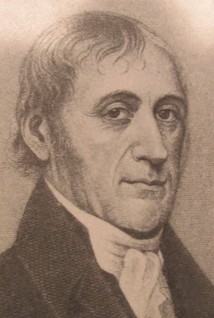
Ogdensburg was named for lawyer and land speculator Samuel Ogden, but the driving force behind the establishment of the city was Nathan Ford, who was born in Morristown, not the hamlet 10 miles away but the town in New Jersey.
Ogden was brutal and forceful in his directions to Ford.
“Gain immediate possession of the works, mills and town,’’ Ogden instructed. “If necessary, use threats and bribes.’’
Ford was equal to the challenge. He designed the village layout, sold lots, built roads and drove away squatters.
Ford established Ogdensburgh (notice the H) as the St. Lawrence county seat and served as a judge from 1802-20 and chief justice. Madlin said he served as Oswegatchie town supervisor, “de facto’’ mayor of Ogdensburgh, and inserted himself into any local controversy.
Ford had quarrels with many local powerbrokers. During the War of 1812, Ford’s friendliness with the British commander left his home unscathed. That irked American General Zebulon Pike.
Ford developed a running dispute with county clerk Alexander Richards, who became Oswegatchie Customs agent. He charged and convicted Richards of interfering with trade along the border. Later, Ford got into a namecalling spat with U.S. General James Wilkinson, who said Ogdensburgh should be burned and Ford hanged; Ford called him a drunkard and tyrant.
Ford couldn’t leave his home during his final years because of tuberculosis. He was irate when the county seat was moved to Canton in 1828, and he died from TB on March 29, 1829.
MARION SANGER FRANK

When women campaigned for equal rights and voting in the late 19th and early 20th centuries, a Jewish woman from New York, transplanted by marriage into Ogdensburg, held a leading role.
During this era, Madlin wrote that women were considered mentally and physically inferior to men. School ended at age 14 for most girls. They were expected to stay home and bear and rear children. The Irish and Germans had partially assimilated into the culture, but Jewish and Italian heritage was frowned upon by white Eurasians. Women who challenged the social hierarchy were often ostracized.
Frank was undaunted. Her father was a prominent attorney, politician and commissioner of education in New York, but he died when Marion was 18 years old. She retained his lessons of fighting for the poor and less fortunate well before she married businessman Julius Frank and moved to Ogdensburg around 1890. Julius had joined his joined his father’s business, Nathan Frank & Son, a large department store on Ford Street.
After the death of her first child, Marion threw herself into the battle for women’s rights. Famous suffragists such as Susan B. Anthony, Dr. Anna Howard Shaw and Carrie Chapmann Catt visited Ogdensburg and spoke at the Opera House.
Her husband, mayor of Ogdensburg from 1914-18, supported women’s suffrage and his wife, who founded the Ogdensburg Political Equality Club in 1915. She traveled to Lisbon, Morristown and Potsdam to advocate for more chapters, served as a delegate to the state suffrage convention in New York, and wrote a newspaper column entitled “News & Views of Equal Suffrage.’’
The Franks lived to see women gain the right to vote in 1917 in New York State, and ratification of the 19th Amendment in 1920.
ABBE FRANCOIS PICQUET
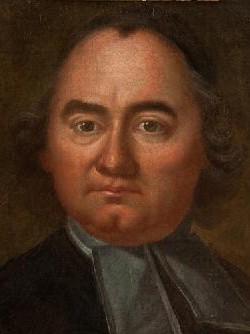
Picquet was ordained a Sulpician priest before he traveled to New France and served as a parish priest in Montreal and Quebec. He was 40 years old when he first visited the confluence of the Oswegatchie and St. Lawrence rivers in 1748, aiming to build a fort for the French government.
“Picquet was the perfect man for the job, with his fluency in Mohawk and familiarity with the land, gained through following Native American warriors on raids (against the British),’’ Madlin wrote.
The Haudenosaunee wanted to develop the fur trade with the French rather than the British, who prioritized populating the land with settlers.
Fort La Presentation – named to honor the Feast of the Presentation of the Blessed Virgin Mary in the Temple — was established on June 1, 1749. It had taken 21 days for Picquet’s party of 25 French and four Native Americans to traverse 10 rapids on the St. Lawrence and deliver their supplies and provisions. By fall, a house and fort were erected, which sheltered 300 Haudenosaunee and Hurons. The roots of Ogdensburg had been established.
FREDERIC REMINGTON
Remington was the preeminent painter, sculptor, illustrator and writer who romanticized the Old American West for Eastern readers in the late 1800s and early 1990s.
He was born in 1861 in Canton and his family moved to Ogdensburg in 1872. His father was a colonel in the Civil War and Remington began making sketches of soldiers and cowboys at a young age. He enrolled in the art school at Yale University, but did not return after his first trip to Montana in 1880. His art was stoked by witnessing buffalo hunts, prairie scenes and skirmishes between Native Americans and the U.S. Cavalry.
He tried his hand at ranching and saloon keeping, but his art career snowballed after his wife bailed for Gloversville, N.Y., about a year into their marriage in 1885. He sent sketches and illustrations to the leading magazines, Collier’s and Harper’s Weekly, andhis works fed their interest in Wild West topics for Eastern readers.
He returned East to Brooklyn and reunited with his wife, then sculpted his first big commercial success, The Bronco Buster, in 1895. For almost 30 years, his sculptures, illustrations and paintings of Western scenes made him a commercial hit.
Remington died Dec. 26, 1909 after an emergency appendectomy, complicated by his weight (300 pounds), led to peritonitis, an inflammation of the membrane around the abdomen.
His work lives on at the Frederic Remington Art Museum, 303 Washington St., Ogdensburg.
Morristown native Jim Holleran is a retired teacher and sports editor from Rochester. Reach him at jimholleran29@gmail.com or view past columns under “Reflections of River Rat’’ at https://hollerangetsitwrite.com/blog/
 Holleran Gets It Write