Our mood is always upbeat during the twisting, turning drive through Pennsylvania coal country, knowing that our two grandchildren await with smiles, hugs and a dozen or more readings of “Go, Dog. Go!’’
We prefer the hilly, local routes more than the interstate on the way to Reading, Pa., because they are less predictable and hold stories – golden domes atop Eastern Orthodox churches, markers for state championship football teams, and my favorite: The sign in downtown Minersville for the Alibi Hotel (reminds me of the HBO series Shameless.)
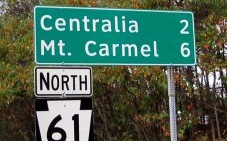
When we faced a major detour last week, the monotony of the 5½-hour drive halted immediately when we spied a green sign that stated, “Centralia 12.’’
“Did you see the sign for Centralia?” Mary asked before I could manage a word. “We definitely have to drive through there!’’
Who could pass on a chance to see a real, live ghost town? We’re not talking about that familiar scene from a western movie where a howling wind rolls tumbleweed down the main dirt street past abandoned storefronts. We’re talking about a town of 1,000 residents in 1980 that was stripped of almost every home, business and person. Today, you won’t find a “Welcome to Centralia’’ sign nor a subscript that states “Population 5.’’ Even the ghosts have abandoned this borough and its two cemeteries.
We’ve been struck by the story of Centralia since 2014 when we attended a six-hour showing of senior film projects at Drexel University in Philadelphia. We went to see our son, Liam, reveal his 15-minute film “Filial,’’ a downbeat drama about a burnout who returns home to intervene in his sister’s relationship crisis. We were rightfully proud of our budding Spielberg, but the former newspaper editors were struck by a 17-minute documentary by Joseph Sapienza — “Centralia, America’s Lost Town.’’
We thought we were abreast of the news but had never heard of the actual tale of the ongoing environmental disaster in this central Pennsylvania village. A coal fire has been burning beneath Centralia since at least May 27, 1962, and scientists think it might last another 250 years.
This mess began when the town council, intent on cleaning up garbage dumped into a former strip mine, authorized firefighters to conduct a controlled burn. However, two days later the trash was still smoldering, so firefighters returned with their truck and hoses to extinguish the remnants. About a week later, they were called again. Unbeknownst to them, the fire had spread through a hole in the strip mine and ignited a coal vein beneath the surface. Fire continued to seep through the vein. By August, state mine inspectors were recording lethal levels of carbon monoxide.
The town council authorized an excavation project that proved ineffective. Next it tried pumping water and crushed stone into the mine, but harsh winter weather compromised the plan. The out-of-site, out-of-mind fire continued to smolder for years, but residents didn’t give it much thought.
That changed in 1979 when Mayor John Coddington, who operated the local gas station, became concerned. He lowered a dipstick into one of his fuel tanks to measure the supply level. The stick seemed warm. He lowered a thermometer on a string and was stunned to learn the temperature of his fuel supply was 172 degrees. He was standing over a potential Molotov cocktail.
Sapienza captured Coddington’s anecdote in his film. He documented how basements became exceedingly warm, how land shifted and crumbled beneath homes, and how roads buckled.
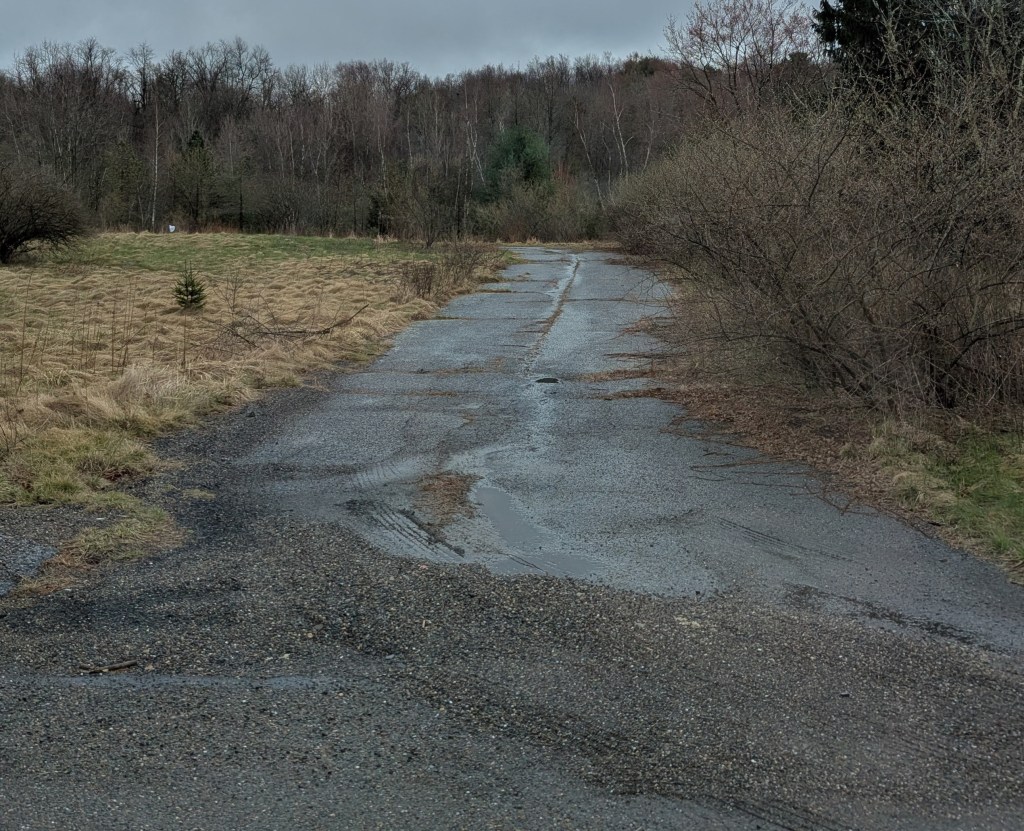
By 1984, Congress authorized a $42 million fund to buy out residents. In 2009, Gov. Ed Rendell invoked eminent domain to clear stubborn residents from their homes.
Sapienza captured all of this in his documentary. He interviewed residents at their former home sites. He showed before and after pictures of businesses. He captured the heartbreak of abandoning lifelong homes and neighbors. His storytelling left a deep impression on us. It left me thinking of villages like Heuvelton (population 700) or Morristown (400). Their history would fade to oblivion.
When we wheeled into the main crossroads of Centralia, we couldn’t locate a sign. Our GPS indicated a fire vent was around the corner. We couldn’t find a plume of smoke, only garbage in ditches and driveways leading to lots overgrown with weeds. Stones lined the front of one property, but no house existed.
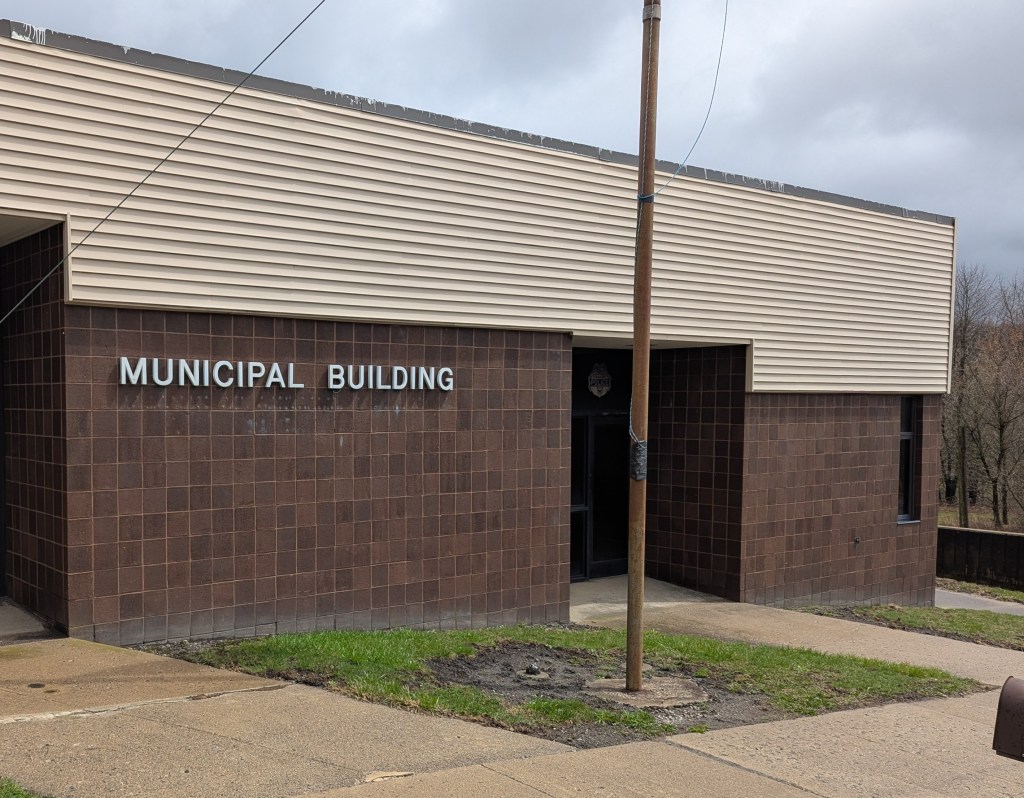
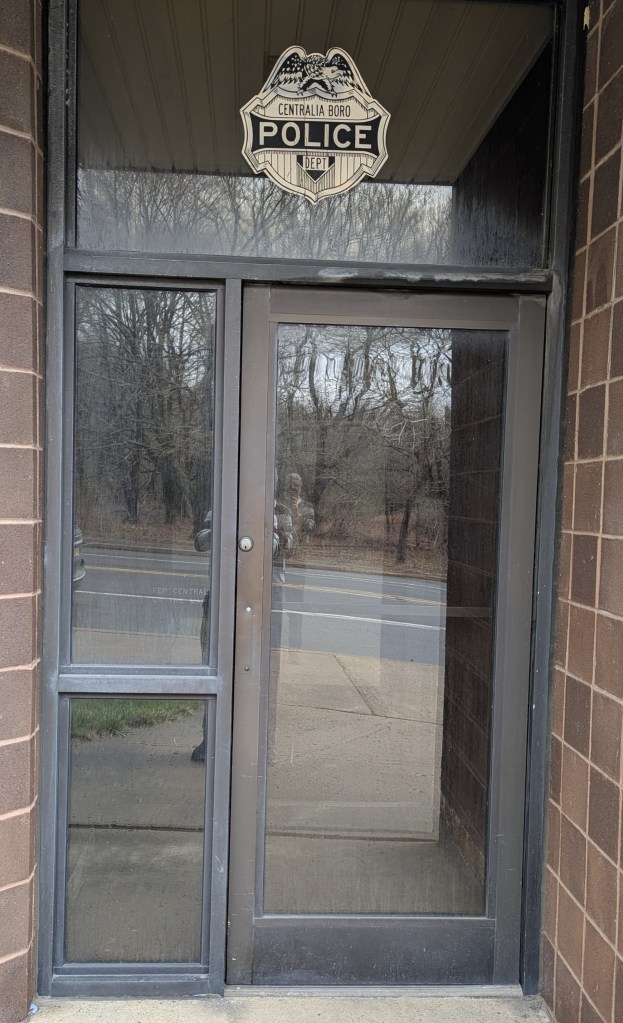
Each abandoned lot raised a sense of loss and despair. The brown brick safety center was identified only as “Municipal Building,’’ but lacked the moniker Centralia. A rescue truck remains parked in the fire department bays at the north end; at the south end you’ll find a larger sticker above the entrance to the former police department.
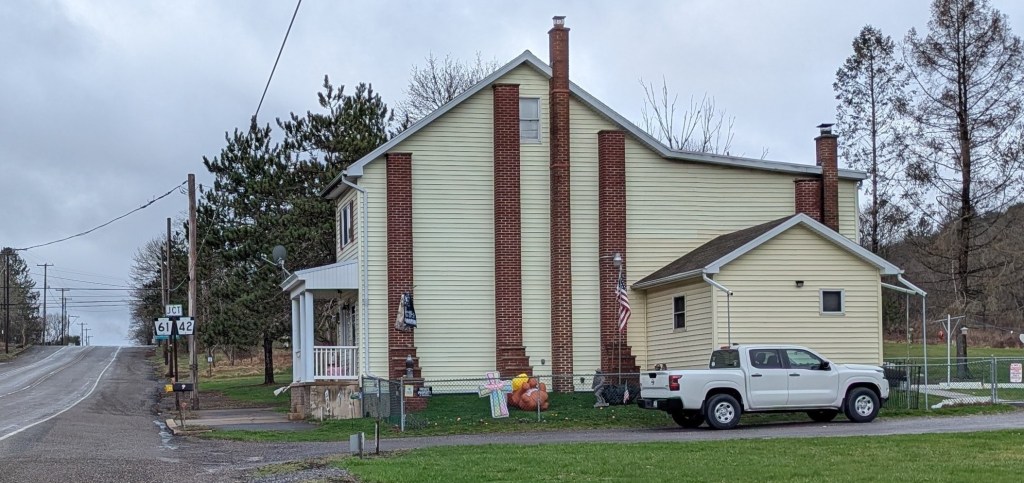
The only sign of life was a single unit of a former row house, with vehicles and toys in the yard. Buttresses were built along the side where it lost the support of razed homes that straddled it. Centralia’s land remains unstable, and the smoldering fire continues to release toxic gases.
“That documentary was so powerful,’’ Mary recalled. “We’re both from small towns so you had a sense what it would be like if your town disappeared.’’
Morristown native Jim Holleran is a retired teacher and sports editor from Rochester. Reach him at jimholleran29@gmail.com or view past columns under “Reflections of River Rat’’ at https://hollerangetsitwrite.com/blog/
 Holleran Gets It Write