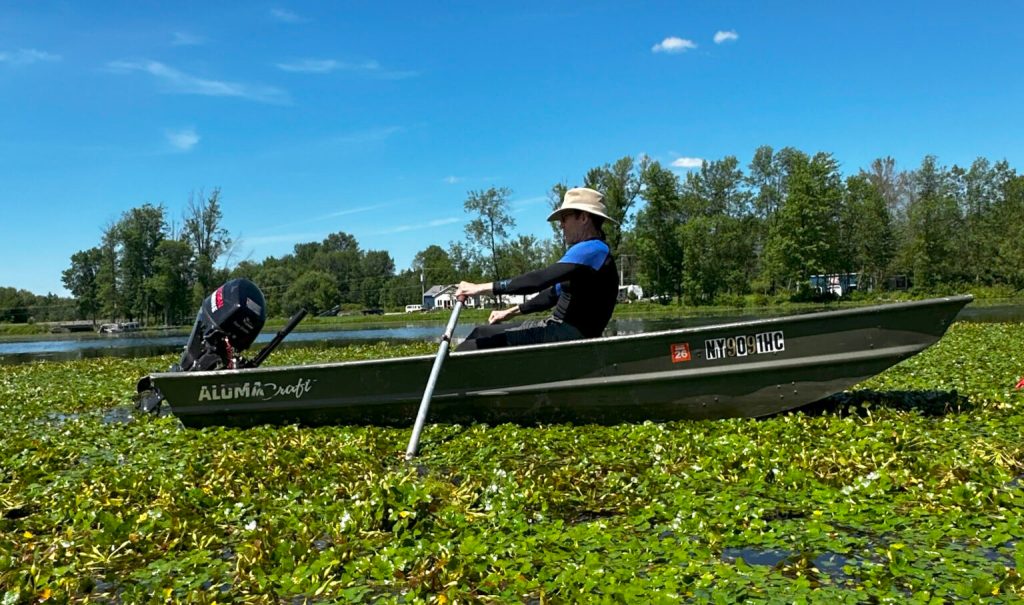

Brad Baldwin wanted to experience life in a small, quiet town so he packed up his doctorate in environmental science and moved to St. Lawrence University in 1995. He knew Canton would be close to countless Adirondack rivers and lakes and the expansive St. Lawrence River.
Nothing has been quiet in recent years. On top of his teaching load, Baldwin has become somewhat of an environmental sheriff, leading the charge against a powerful threat to the Oswegatchie River, Black Lake and now the St. Lawrence — water chestnuts.
Threat might seem like too potent a word, but it isn’t. When asked to describe the water chestnut invasion, Baldwin spelled it in capital letters: “H-U-G-E.’’ Ground zero is the Oswegatchie River, just west of Heuvelton.
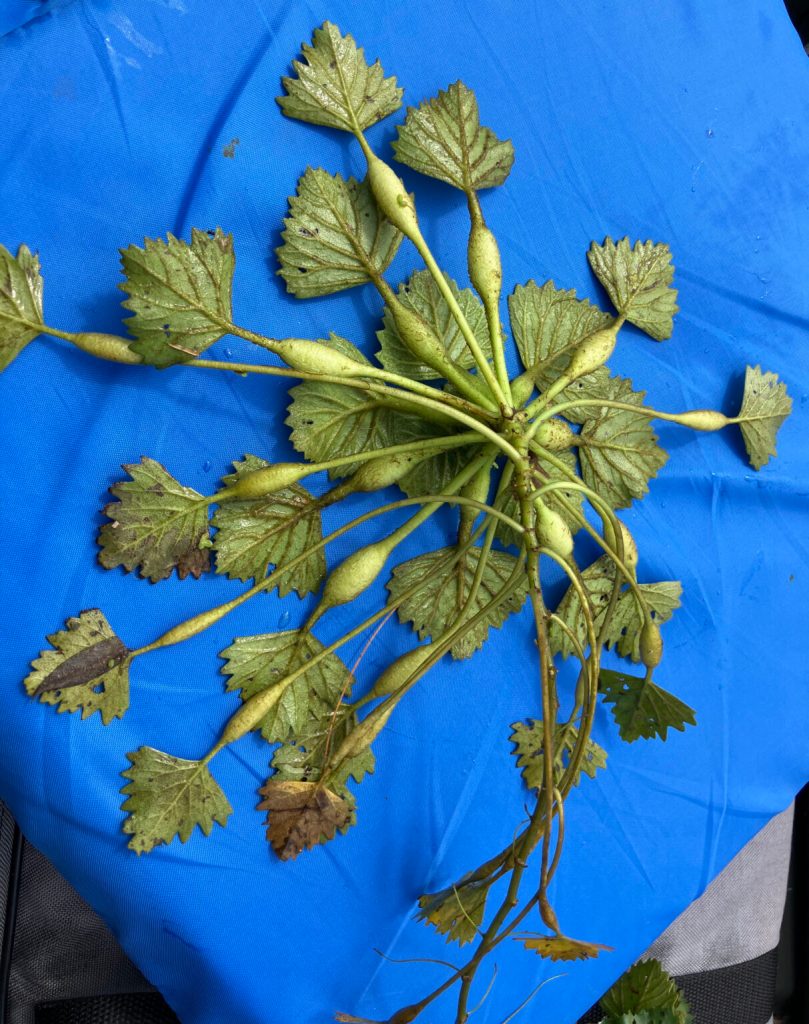
“If you think Eurasian water milfoil (another invasive aquatic nuisance) is bad for boating and possible fishing, multiply that by five for water chestnut impacts,’’ Baldwin said.
A nuisance to boaters, water chestnuts form dense canopies of vegetation along low-current areas and shorelines, usually when depths are less than 10 feet. But they pose the greatest threat to fish populations and the lucrative fishing industry because they block sunlight to the water, reducing water oxygen levels. Hence the warning to Black Lake businesses.
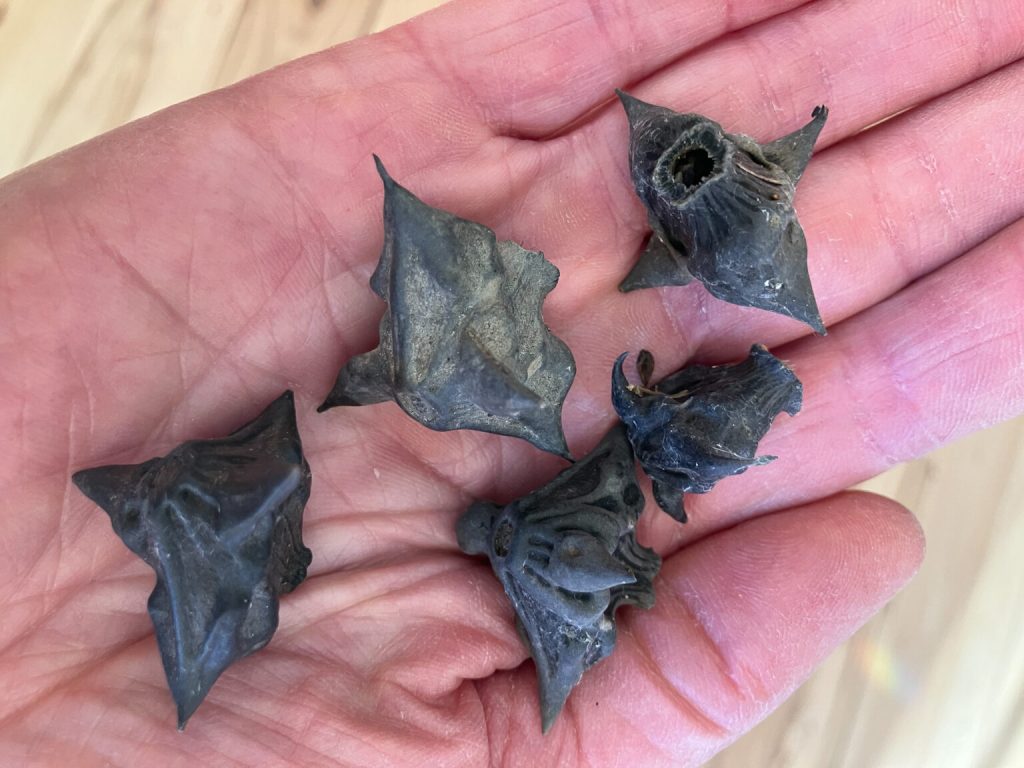
Water chestnuts contain green clusters of floaters spreading out to toothed, triangular leaves. The plants gather nutrients from a central stem extending to sediments along the water’s bottom. Beneath the floating clusters are four-pronged nuts that fall off in 2-3 weeks. Eventually, the nuts can develop 10-20 more nuts. The growth is exponential. The nuts cling to boat lines and float with currents. They have reached Eel Weir State Park, and Baldwin believes the nuts have been tumbling downstream for the past four years to Ogdensburg, perhaps as far as Massena. There was a sighting of water chestnuts at Tibbetts Creek in Lisbon.
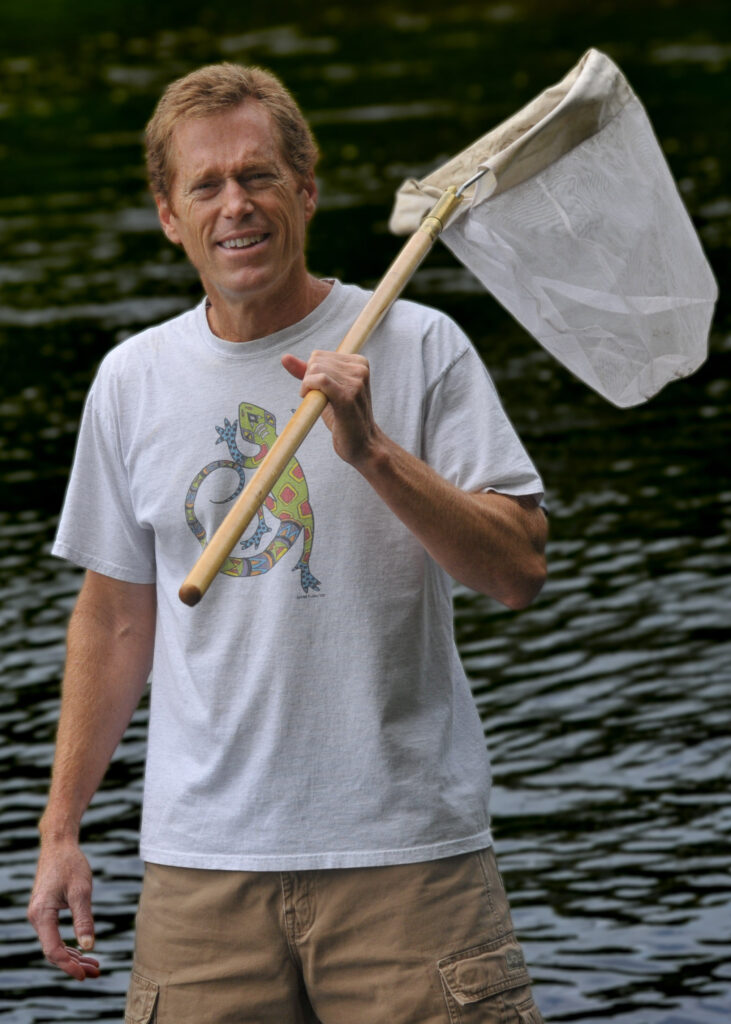
“As I have painfully discovered, the nuts can stick to anchor and dock lines. So if you boat in the Oswegatchie River one day and trailer down to the St. Lawrence River at Ogdensburg, you might inadvertently spread nuts,’’ said Baldwin.
He worries most about Black Lake, which has the potential to become a “chestnut factory.’’ Any spread there is “very limited,” he said, “but we have yet to carefully survey the bulk of the lake’s very long and complicated shoreline.
“I do think the Black Lake outlet to the Oswegatchie River, where water can backflow into the lake (two floods this summer) is relatively clean though. Whew, for now!’’
However, Baldwin’s team of student researchers did identify a patch on the east side of the lake near the Route 58 bridge at Edwardsville.
The bulk of reclamation work has occurred at Heuvelton. Using grants from the Department of Conservation and the state Power Authority, a weed harvesting contractor has been cutting off the top halves of plants before they grow nuts. The Town of Oswegatchie bought a second harvester with the ability to pull the plants, preventing regrowth. The hope is that the harvester will halt or mitigate the water chestnut invasion.

Baldwin, who presented on the topic Saturday evening at the Gateway Museum in Morristown, called water chestnuts “a familiar tale of an invasive species presenting headaches to folk who just want to have a good time on the water.’’
He said shoreline dwellers can address the issue too. From a boat, pull the plants from the water’s bottom. Bag the plants and dispose of them in the trash. Then contact his office (bbaldwin@stlawu.edu) so researchers can log the site.
You can find detailed information and photographs at
https://sites.stlawu.edu/brad-baldwin/water-chestnut-project/
Morristown native Jim Holleran is a retired teacher and sports editor from Rochester. Reach him at jimholleran29@gmail.com or view past columns under “Reflections of River Rat’’ at https://hollerangetsitwrite.com/blog/
 Holleran Gets It Write