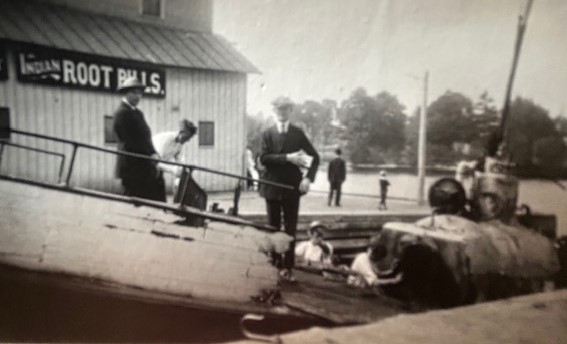

When Rick Johnson delivers a presentation Thursday on St. Lawrence River ferries, he’ll reminisce about simpler times from the 1920s through the 1950s.
He’ll show sepia-tinted photos, cite the working families that manned the boats, detail how passengers boarded trains or buses to shop in Ogdensburg, and recall how his grandparents labored to make the Morristown and Brockville Transportation Company successful.
Ultimately, he’ll revisit a fond memory of his youth when he speaks at 6:30 p.m. at the Gateway Museum in Morristown. Although the ferry service ceased in the early 1950s, Johnson retains a treasured moment.
“I was only 5 years old when the ferry shut down, but I remember riding on it,’’ Johnson said. “I stood on a box and held the wheel. It was a wonderful time for a child. When my mother needed to keep us busy, my brother Dan and I would ride it all day.’’
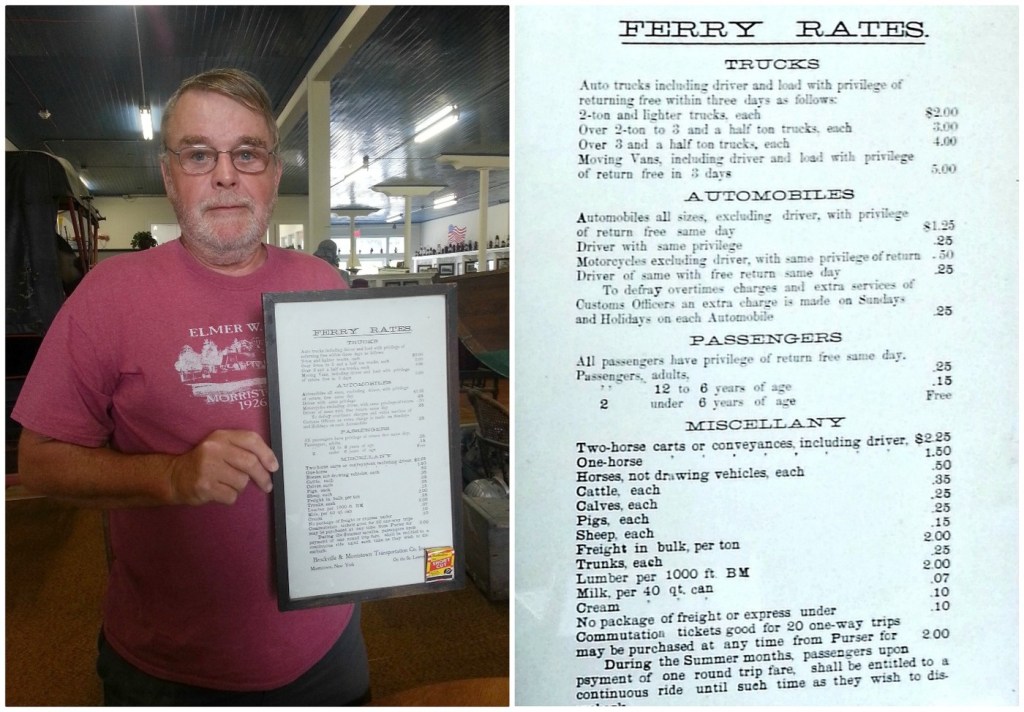
Johnson’s family connection developed into a passion for this retired vice president of philanthropy and alumni relations at Clarkson University. His research determined ferry boats have been crossing between Morristown and Elizabethtown (renamed Brockville in 1812 for British general Isaac Brock) since 1808. Ogdensburg and Prescott were serviced as early as 1815 by a ferry, powered by a horse walking a treadmill.
His dearest memories emanated from conversations with his mother, Gloria, about how his grandparents, Frank and Dorothy Scott, owned the Morristown-Brockville service for almost 45 years.
Frank Scott was a Morristown native who returned from Cornell University in 1904 with a law degree, became active in Republican county politics, served as the local postmaster, helped to form the Citizens National Bank, and joined with businessman James Crawford and Great Lakes captains Matt Farrell and Wilbert Chambers in 1908 to purchase a ferry service to Brockville. The group purchased Chambers’ ferry boat and named the company the Brockville and Morristown Transportation Company.
“There were no cars or trucks,’’ Johnson said, “but there were plenty of carriages, wagons and passengers. The ferry towed a scow for pigs, cattle and lumber.’’
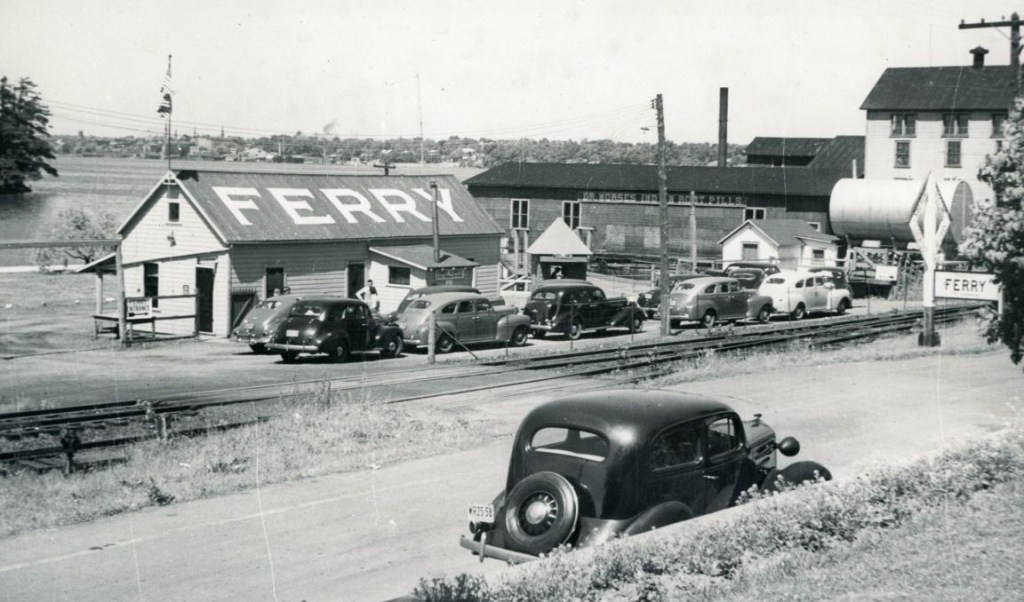
Passengers boarded at a slip nearthe New York Central train station, adjacent to the Dr. Morse’s Indian Root Pills factory. Next to the slip was a U.S. Customs house.
In the first season, the company earned a $2,000 profit on revenue of $5,800. The next year, profits jumped to $4,400 on $7,200 in revenue. Cross-river traffic remained steady, but the rise of the automobile changed the business plan. Frank Scott realized he needed to accommodate cars and trucks so a larger, wooden boat, John Webster, was commissioned in 1916 and built at the St. Lawrence Boatworks, once the site of Dave Angrove’s bar and The Harbor Inn. Names like Cree, Seele, Whitmarsh and Jellie were principal builders.
Frank met a local woman, Dorothy Barker, and hired her to be treasurer. They married in 1918 and had two daughters, Carol and Gloria, Dick’s mother, born in 1923.
All the time, the ferry remained lucrative. Records show that in 1925 alone, Victory transported 9,863 vehicles and 57,107 passengers during the shipping season. When ice began to form on the river, there was no drydock. The boat was anchored in Morristown Bay and ringed with hay bales. Once the spring thaw began, bales were removed and the boat prepared for the season.
Business was booming and it required a bigger boat. A 92-foot, steel-hulled boat, the James Crawford, was commissioned in 1925 and intended to hold 20 automobiles along with passenger cabins. It was delivered Sept. 27 that year, but three weeks later was flipped to an Indianapolis company for service on the Great Lakes. The Victory was back in service.
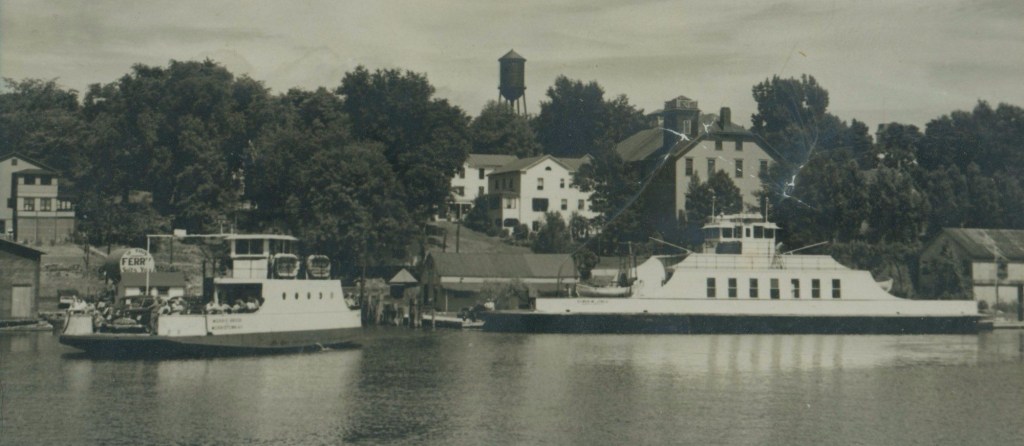
Next, the Scotts turned to the most venerable of all their boats, the Elmer W. Jones, named for a World War I Canadian hero from Brockville. Architect Eads Johnson designed a steel-hulled ferry, 117 feet long and 39 feet wide, that was double-ended, meaning you could load or unload from either end, a big innovation at that time. The diesel-powered ferry, the fastest on the river, could carry 25-30 autos and passengers across the river in 20 minutes.
The ferry boat also was a gateway to social life. For a 25-cent fare and $1.25 per automobile, young Canadians flocked to the village’s Rose Manor to take advantage of more liberal American drinking laws. Others boarded a train or bus to Ogdensburg to shop, eat dinner or attend Big Band dances at the Armory. But patrons were wary not to miss the last boat to Brockville at 11 p.m.
Morristown was bustling. Route 37 traversed the middle of the village. Its 2,300 residents had choices for groceries, hardware and gasoline. The Comstock family boosted local employment by selling and shipping its herbal pills, and the ferry was humming.
On a winter break from the ferry business in Orlando, Fla., in April 1935, Frank Scott contracted pneumonia and died. At that time, there were no effective antibiotics to administer. Dorothy succeeded him as company president.
She later met a businessman, Fred Kury, who had started a bus service between the Morristown ferry dock and Ogdensburg. Buses filled the gaps when the ferry and railroad schedules didn’t mesh. Eventually, Dorothy and Fred married in May 1937.
In high school, Gloria joined the ferry business, selling tickets, ordering supplies and doing clerical work. Eventually, she met and married Richard Johnson.
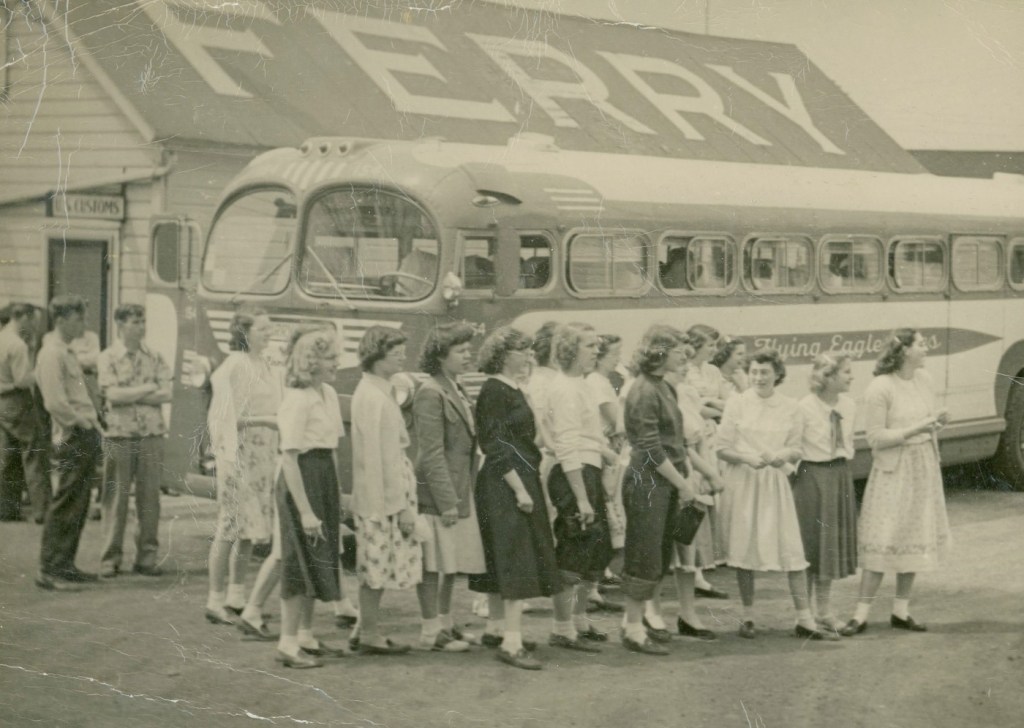
When the United States entered World War II, the Elmer W. Jones shipped out too. The War Department requisitioned the boat for service in New York City harbor and Brooklyn Naval Yard, Little Creek naval base in Virginia and the Houston shipping canal. A smaller boat, the MorrisBrock went into service in May 1943, carrying 11 cars. Once the Elmer Jones was repurchased from the government and refurbished, the two ships ran concurrently for one season (1946) until the MorrisBrock was sold.
The postwar recession affected the ferry business. The war boom of manufacturing retracted, consumer spending dipped and returning soldiers swelled the unemployment ranks. People weren’t crossing the river. Canada suffered similarly.
The Kurys knew their model was unfolding. Johnson said the last crossing of the Morristown and Brockville Transportation Company occurred on Dec. 8, 1952.
“People thought it would start up again,’’ Johnson said, “and I don’t think Fred and Dorothy thought it would stop either.’’
They offered the boat to the city of Brockville in January 1953 for $75,000, but the Brockville council could not decide and the sale was not completed. Local men Tom Cree and Charlie Kohler leased a diesel passenger boat, Atair, for the 1953 season, but it was not profitable and closed.
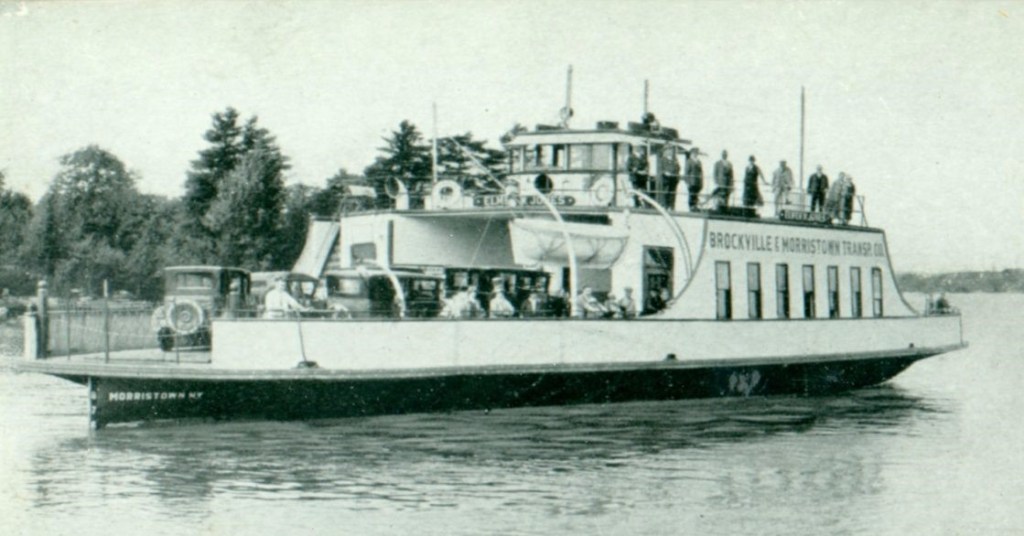
The Elmer W. Jones found a new home in Newfoundland, remaining in service as a ferry until 1960. Then it was outfitted with refrigeration equipment and converted to a fish-processing vessel.
St. Lawrence Seaway construction began in the summer of 1954, and the Prescott-Ogdensburg International Bridge opened in 1960. An era had ended.
Morristown native Jim Holleran is a retired teacher and sports editor from Rochester. Reach him at jimholleran29@gmail.com or view past columns under “Reflections of River Rat’’ at https://hollerangetsitwrite.com/blog/
 Holleran Gets It Write