

When I walked out of the fieldhouse after my game, I was convinced. I was done refereeing youth sports. I’ll just stick with my high school schedule for my final few years, then retire.
I had just worked the championship game of a fifth- and sixth-grade boys league. The screaming parents were supercharged, and I heard too many “Oh my Gods.’’ The coaches on both benches were out of control. The players actually were the calmest, in part because I ran a brief rules clinic before the first whistle.
Once the game started, I witnessed the No. 1 problem with youth sports – overbearing coaches who watch too much TV, don’t know bench decorum, and insist on trying to officiate the game rather than coach their players.
Before the first faceoff, I had drawn both teams together and reiterated that this was a no-check game.
“Fellas, you can keep your hands together on your stick and defend your space, but you can’t thrust your stick with two hands. That’s a crosscheck. Anything from behind is an illegal check. If you swing with one hand, it’s a slash.’’
It seemed to make an impression. The players were mostly disciplined. About 10 minutes into the game, I wished the coaching staffs had been properly trained like high school coaches, who must pass a certification class.
The White coach was protesting an offsides call. He had an extra attacker in the offensive zone, and it was an easy call. I watched the boy run back to the defensive side of the field. Whistle. Offsides. Blue ball. The coach protested and wouldn’t stop.
“That was terrible,’’ he said at least three times.
“Coach, you’re done. The next time I hear anything unsportsmanslike, I’m taking the ball away.’’
He kept asking for a “discussion.’’ This is Game Management 101. We don’t stop the game to conduct a rules clinic. Coaches coach their players; referees officiate.
He was out on the field, still asking. Flag down. Conduct foul. One of his players had to leave the field for a 30-second penalty.
He kept asking for a discussion.
“Coach, the next time it’s an unsportsmanlike conduct.’’ It’s a tool to control runaway coaches. Fans feed off a coach who is out of control. Players take on the personality of their coach. So managing the benches is crucial.
White’s bench was next. An assistant came 15 yards out on the field after a goal to coach a player. High school coaches know this is sacred ground; youth coaches think they are entitled.
“Coach, sideline! You can’t be on the field.’’
He showed me a thumbs up. In the second half, a player was dazed from a collision on the far sideline. Before I could contact the head coach, the same assistant sprinted across the field. I told the head coach he needed to be summoned by the referee. Again, no coaching clinic.
When I left the field after the game, the assistant confronted me to shout how “terrible’’ I had officiated and how he was justified because “it was a head injury.’’
I asked for his name, he kept shouting ‘terrible,’’ and I told him he was “done.’’ It was clearly abuse, but I was left on an island.
What does a youth ref do when a game is over and a league is complete for the season? You can only report the offender to game management, which had no presence within the arena. I found a guy at the front desk and relayed my story. He said they treat this seriously. I wasn’t convinced.
On the drive home, I reminded myself about the encounter the previous day with a successful local basketball coach. He told me he was retiring from coaching the next season.
“Great,’’ I suggested, “you could join the officials association.’’
“No way,’’ he responded. “Everybody is complaining, the fans are yelling, it’s too much of a hassle.’’
Then my thoughts turned to the high school boy who two weeks ago wore eye black like it was war paint. He wasn’t preparing to hunt buffalo; he was playing high school lacrosse. The rules emphasize you get one horizontal stripe under each eye. In our preseason meetings, it was a point of emphasis to enforce this rule.
When instructed to fix it during the captains meeting, he told the head ref, “I’ll fix mine when you tell the other team that they have to fix theirs.’’
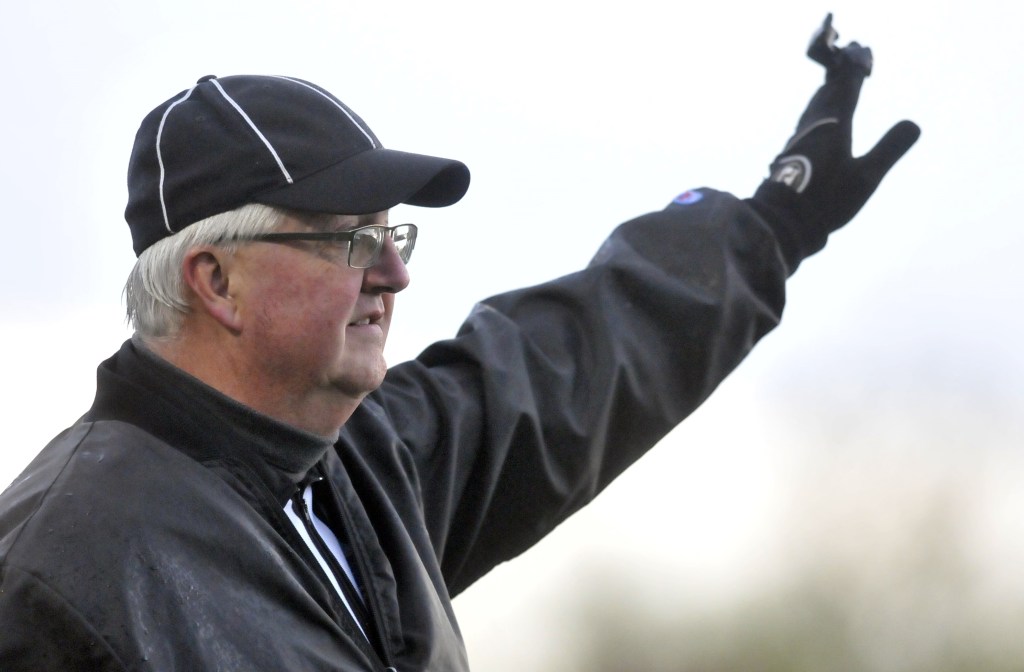
My partner grimaced and told him, “Just fix it.’’
“No, I’ll fix mine when you tell them they have to fix it.’’
Great, we’ve got an entitled 16-year-old dictating how to manage the game. My partner didn’t flinch. He threw a flag for a conduct foul and the opposing team started with the ball.
That led me to my final encounter leaving the arena. A grandfather caught my eye and said, “They don’t pay you enough to deal with that stuff. You did a great job.’’
I thanked him, then dwelled on the contentious nature of the game and the shortage of referees:
- I’m good enough to ref high school lacrosse for 12 years, and high school basketball for 17, yet at a youth game I’m “terrible?’’
- Our numbers are dwindling. If I stop, who will do youth games?
- I undertook this 20 years ago when I saw veteran refs loafing through youth basketball games. Can I continue to elevate the profession?
- Is this worth the hassle?
That grandfather gave me a glimmer of hope and softened my dismay. Despite the abuse, I owe a debt of gratitude from my youth, and I need to pay it forward to this generation.
Morristown native Jim Holleran is a retired teacher and sports editor from Rochester. Reach him at jimholleran29@gmail.com or view past columns under “Reflections of River Rat’’ at https://hollerangetsitwrite.com
 Holleran Gets It Write
Don’t change anything you are doing! It’s everywhere.
Get Outlook for iOShttps://aka.ms/o0ukef ________________________________
LikeLike