
The seeds of this column were planted 37 years ago when my dear friend, John Byrne, a serial talker during Mass, turned around in his pew and asked, “Is Katie a Mongoloid?’’
I was startled but waited until the choir reached the third verse of the recessional song, realizing how innocent his question had been. “Well, John, technically yes. But that’s an antiquated term. We say Down syndrome.’’
“I asked because my brother had that. My parents were told to put him on a farm out in Wayne County when he was young.’’
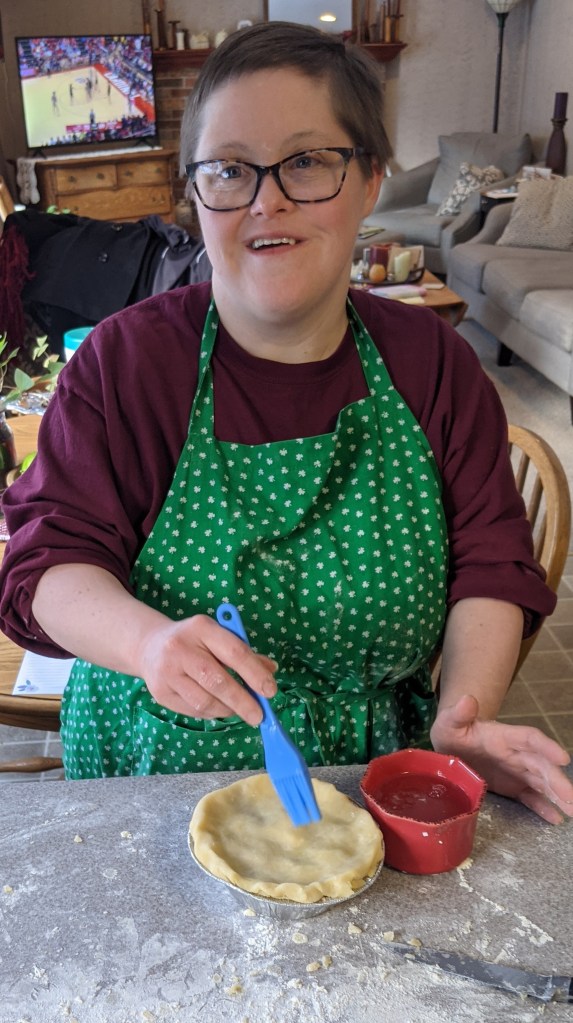
If John were still alive, he’d remain one of Katie’s biggest cheerleaders, for the progress she has made, and for the acceptance and inclusion of developmentally challenged adults into society.
Kathleen Barbara has grown into a thriving, productive 38-year-old who makes minimum wage at her 30-hour a week job packaging and shipping spices, contributes to the economy with groceries, shopping, rent, haircuts, etc., and volunteers at a church supper program.
That exchange at church long ago begs the question today – Is our society backsliding in its treatment of the developmentally challenged? Have we lost our way amid the entitlement of grievance politics? Have we regressed since President George H.W. Bush in 1988 campaigned for a “kindler, gentler nation?’’
The answer for each question is decidedly no.
Russ Backus has worked for the ARC of Jefferson-St. Lawrence for more than 40 years, beginning with an entry-level position at Camp Portaferry near East Pitcairn working with developmentally disabled adults. He recalled the insensitivities of the “R’’ word, the misdiagnoses of campers’ medical conditions, the rigid schedules that placed the system ahead of the individual’s needs, and the emphasis on disabilities rather than abilities.
“I think all progress stems from one fact – growing, continued awareness that people with disabilities are people first,’’ Backus said. “If we don’t have that, we have nothing.’’
Backus, who lives in Morley and works in Canton, has risen to the position of quality services coordinator with ARC. He runs quality assurance programs, teaches crisis intervention skills, and monitors 51 residential houses (19 in St. Lawrence County) and four employment centers in Hermon, Ogdensburg, Massena and Norwood.
He received his baptism by fire in the 1980s when the state moved 100 residents out of Willowbrook State Hospital on Staten Island and placed them in St. Lawrence County. Willowbrook became notorious in 1972 when TV reporter Geraldo Rivera exposed the abuse, filth and sub-standard living conditions at the facility, designed for 4,000 but neglectfully warehousing 6,000 residents.
Backus recalled how the system once operated on a factory model. Every client received the same lunch box. Everyone ate lunch when staffing made it convenient. Unappetizing food was served in paper bags taken from portable coolers. Anti-psychotic medicines were prescribed rather than anti-depressants.
Positive change has emerged slowly:
- Technological advances have been applied. Non-verbal residents use tablets and computers to unlock their communications with staff members, and computer technology drives wheelchairs.
- Conditions such as autism are not treated with a barrage of drugs, but rather with positive behavior reinforcements. Backus recalled the 3-year-old from Willowbrook who was treated for years with anti-psychotic drugs.
- The workforce now is considered direct support professionals and wages and benefits are being lifted to recognize their skill and empathy.
- Community partnerships are thriving. When Covid precautions idled buses, ARC established routes for older adults. Businesses are hiring more ARC clients because of their low turnover rate and dedication.
Ann Spies of Morristown marvels at the dedication and commitment that direct support professionals extend to her daughter, Johanna Spies-Evans, at her residence in DeKalb Junction.
“I have nothing but good to say about ARC because it boggles my mind that its employees can embrace a life of being so loving and good to my daughter and hundreds of others,’’ said the retired OFA languages teacher. “They do it willingly and happily and cheerily, and that someone has that in their heart is wonderful.’’

She has seen her daughter transition from a happy teenager, who loved watching her brother win a state championship with the Canton high school hockey team, to an adult woman diagnosed with bi-polar disorder among other challenges. Still, Spies has seen the progress and the perseverance of caregivers.
“It’s the kindness of the individuals that take care of my Johanna.’’ She emphasized. “I can’t believe that God gave us so many people that love and embrace the handicapped. It’s a miracle to me.’’
Spies and Backus appreciate the progress that people with disabilities have made in their communities.
“They’re not burdens, they’re not challenges; they are people,’’ Backus said. “People need different things depending on who they are. We have to recognize their needs. They have gotten the short end of the stick forever.’’
Morristown native Jim Holleran is a retired teacher and sports editor from Rochester. Reach him at jimholleran29@gmail.com or view past columns under “Reflections of River Rat’’ at https://hollerangetsitwrite.com/blog/
 Holleran Gets It Write
Thanks for the update, Jim! Glad to hear that things have improved for developmentally challenged folks. You write with passion. Bravo!
LikeLike
Another great article! Thanks for showing the public the brighter side of life which has finally occurred for the challenged individuals.
LikeLike