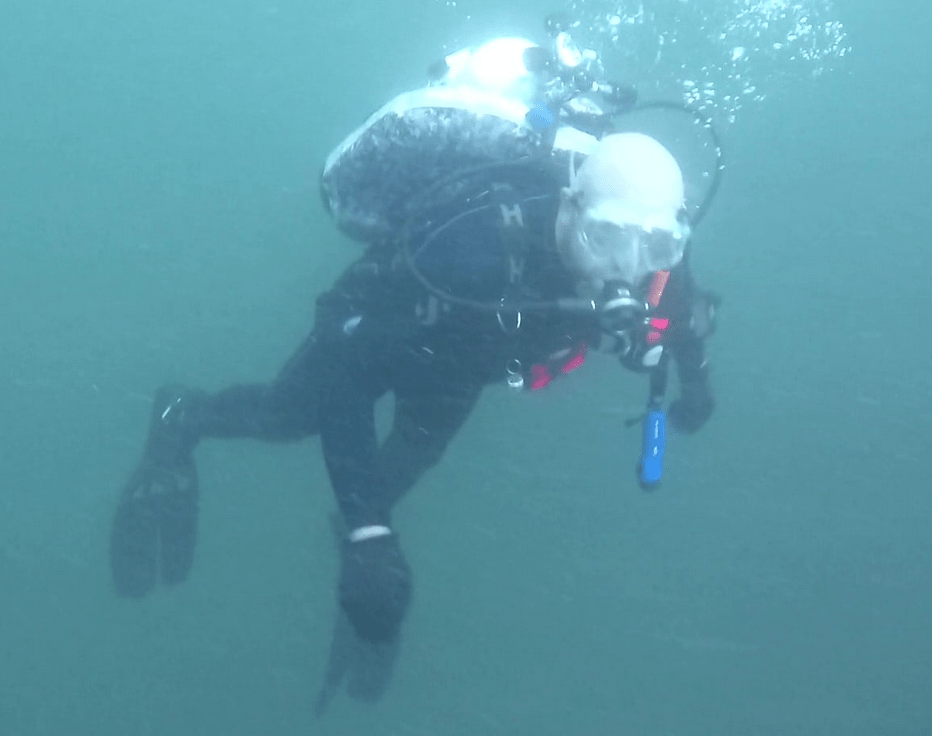

Jeff Johnson, married father of five, plays golf once a week, runs in a two-season basketball league, volunteers for the Brier Hill Fire Department, makes ambulance runs to Albany, Vermont and Syracuse, and works full-time as an emergency management officer for Fort Drum.
His busy schedule and resume would not be complete unless you included his work as a rescue diver for the Brier Hill firemen and the Jefferson County STAR team, a Special Tactics And Rescue unit. But Wednesdays, he focuses on his passion – scuba diving in the St. Lawrence River.
He is a hard guy to pin down. I caught the 47-year-old on a Thursday in his vehicle, making the 37-mile commute back to his wife, Andria Perretta, and teen children in their Brier Hill home.
“It’s all about setting up your calendar and making time for everything,’’ Johnson said. “It’s also about saying ‘No’ to a lot of things.’’
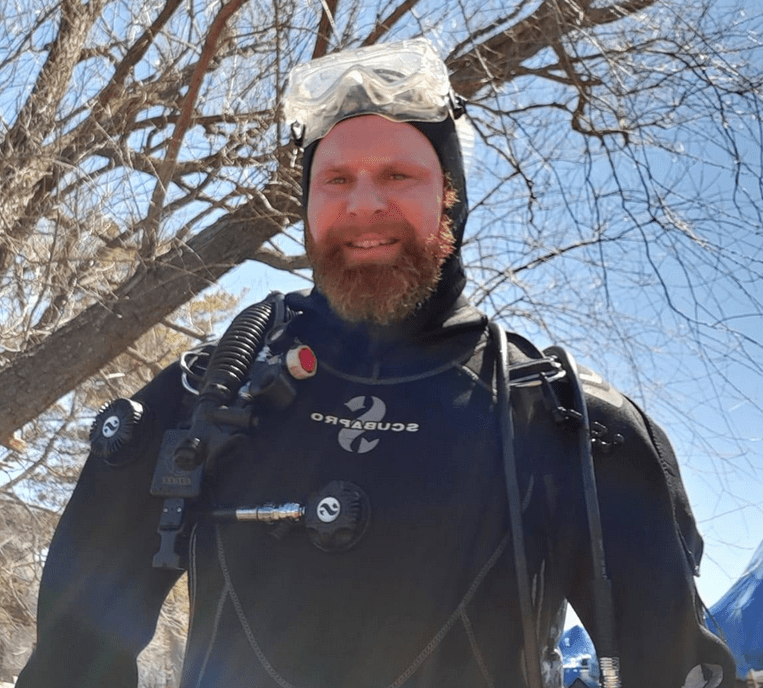
Johnson developed his love of diving in the sixth grade when he conquered his fear of the water and taught himself to swim with a mask and snorkel at his Aunt Hannah’s camp, Winter Haven, on the St. Lawrence.
“Once I learned to swim, I was eager to become a diver. Luckily, the Army gave me that skill.’’
Two weeks after high school graduation from Morristown in 1994, he entered basic training. His service duty led him to Iraq, Afghanistan and Bosnia, but he always returned to the North Country.
“I joined the Army to get away from the smalltown life, but the Army decided I would be best suited for 17½ years with nine deployments out of Fort Drum with the 10th Mountain Division Commandos.’’
He learned to dive in 2007 as a requirement for missions, then earned his civilian certification in 2010.
After 21 years in the Army, said Johnson, who retired as First Sergeant in 2015, turning down a promotion to Command Sergeant Major. “I had spent too much time away from family, and you only get lucky so many times before it runs out. I thought I would never miss the Army. I was wrong.’’
After three years as emergency manager for River Hospital in Alexandria Bay, he returned to a similar position at Fort Drum in 2019. He has remained connected with Army folks and the river.
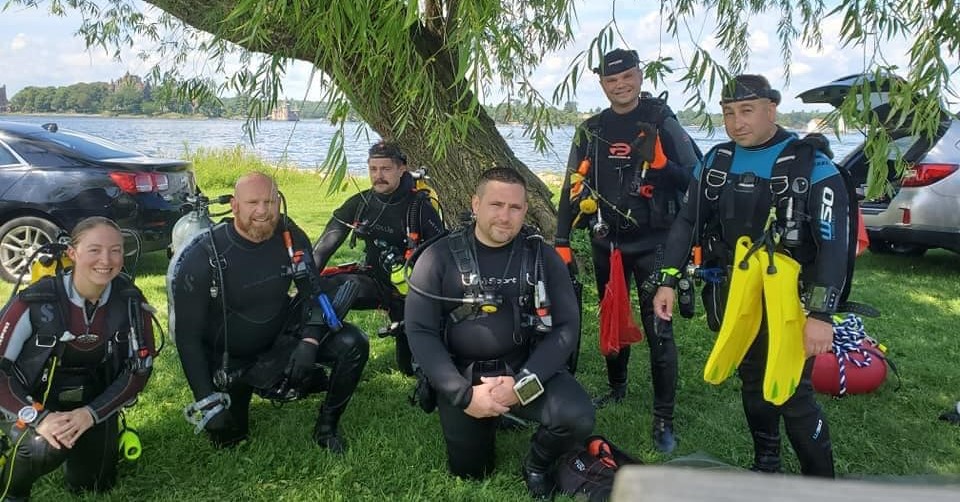
“I typically dive with military retirees that I have served with, and/or new divers that are employees of the Fort Drum directorate. Our favorite spot is in Alexandria Bay, either at the Bonnie Castle Dive Park, or the wreck of the Islander behind River Hospital.’’
The Islander, built in 1871, is a favorite among divers. It was a 125-foot sidewheel steamboat that delivered mail between Clayton and Alexandria Bay before converting to a tour boat in July 1893. While moored, The Islander caught fire in September 1909 and sank at the foot of Market Street in Alex Bay.
He has more favorites in this maritime graveyard:
Robert Gaskin – The 132-foot vessel was serving as a cargo and salvage barge when it suffered a triple-whammy near Brockville. It rests about 65 feet down, about 500 yards offshore from Centeen Park.
The Gaskin was used as a platform in September 1889 to raise the William Armstrong, a steam-powered ferry that had sunk on the American side near Morristown, was towed to Brockville, but sunk again outside the harbor. During the raising, a rope broke on a steam-filled pontoon and it rose like a torpedo, puncturing the Gaskin’s bow and sending it to the bottom. Two attempts to raise the Gaskin led to two more sinkings and it was abandoned two months later.
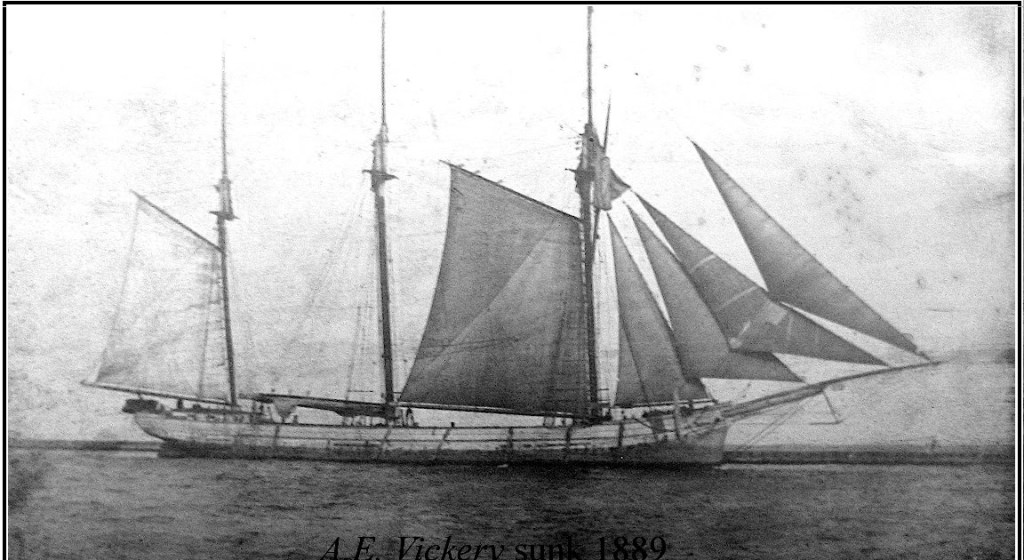
A.E. Vickery – The three-masted schooner was headed to a Prescott distillery with 21,000 bushels of corn when it struck a shoal and sank off Fishers Landing, opposite Fineview on Wellesley Island. It remains about 115 feet down.
St. Louis – The schooner was 50 years old when it went down in 15 feet of water off the Cape Vincent village boat ramp.
Keystorm – The Titanic went down in April 1912; the Keystorm sank in the St. Lawrence about six months later. The 258-foot cargo steamer was carrying coal from Ashtabula, Ohio, to Montreal that October when it struck Scow Island shoal in the fog. Its stern rests at an angle about 120 feet down, about a mile northwest of Oak Island near Chippewa Bay.
Maggie L – The 90-foot wooden schooner was leaving the shipping channel, heading into Clayton, when its bow was severed by the 260-ton, steam-powered steel freighter Keystate in November 1929. It went down immediately in 75 feet of water.
Johnson and his pals combine recreational dives with training for novices.
“We do both because you can never have enough guys down there,’’ he explained. “There can be a lot of distractions. Fish. One moment you spot an unusual one and watch it, then you are separated.’’
Divers manage a lot of stress underwater. They make sure they have enough air. Am I overweighted by the heavy gear? The pressure on their bodies can create stress and panic.

“We dive with a lot of inexperienced people to try and certify them and build their confidence,’’ Johnson said. “If you’re not confident and don’t pay attention to detail and your gear, it could be catastrophic.’’
The grim aspect of this passion is that one or two times annually he is asked to recover a drowning victim. The joy comes from exploring the depths of the river, places where history is frozen. He has found antique bottles and 200-year-old ammunition, both still intact.
“There are a lot of areas where human eyes have never been before, which is why the adventure attracts me and those I dive with.’’
Morristown native Jim Holleran is a retired teacher and sports editor from Rochester. Reach him at jimholleran29@gmail.com or view past columns under “Reflections of River Rat’’ at https://hollerangetsitwrite.com/blog/
 Holleran Gets It Write