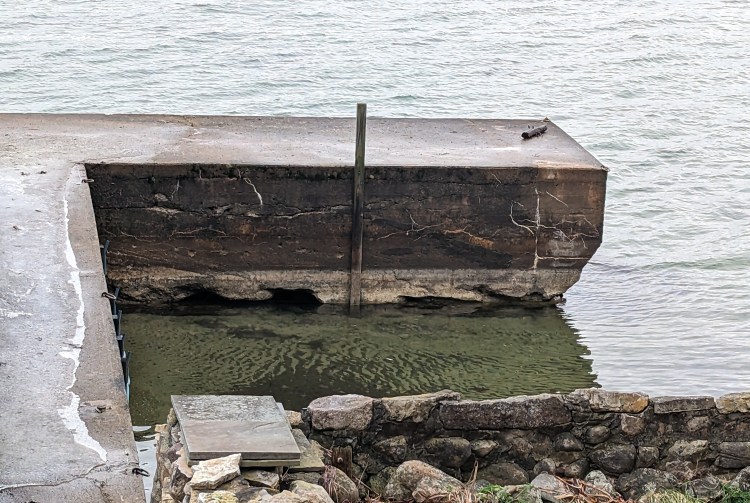
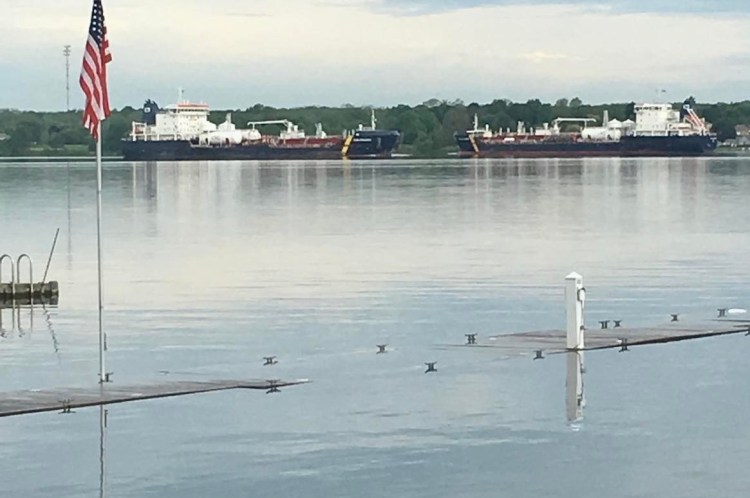
On New Year’s Day, I checked the St. Lawrence River level at my sister Maureen’s home at Merry’s Point in Morristown. You didn’t need to find a yardstick to realize only 6 inches of water stood against the base of her dock. The conditions that had peeved shore residents and boaters last summer and fall had remained consistent.
I thought things would turn worse while observing this “Winter Without Snow.’’ I haven’t run the snowblower all season in Rochester, where we average 100 inches of snow. While the majority of our snow falls from January through March, we’ve received virtually nothing. Forget the two major storms in Buffalo. It’s just a postage stamp when compared to the entire Great Lakes Basin stretching from Minnesota to New York. No snow means no runoff into the Lake Ontario watershed.
Although the river is low, it can’t get much worse. The saving grace has been rain, enough so that the Great Lakes Basin received 92 percent of average precipitation during the last year. Lake Ontario and the St. Lawrence are lingering around 245 feet above sea level. That traditionally rises about a foot by June, then goes through a steady decline into the fall.
You can complain all you want about the International Joint Commission’s 2014 Plan or shipping interests at the Port of Montreal, but the plain fact remains the river needs two things – rain and runoff, not just throughout the North Country and southern Ontario, but throughout the Great Lakes.
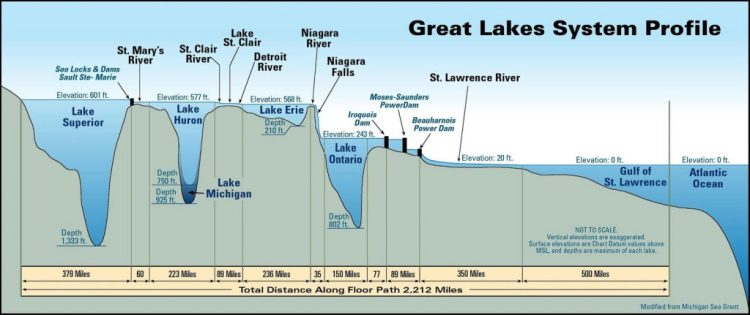
We had plenty in 2019 from record rains when the river crested at 249 feet. We aren’t getting enough as it currently lingers at 245.1, down from 245.6 a year ago. In low-lying areas of the river, docks rest on stony, dry bottoms, trees have toppled, and fish migration is disturbed.
“If river levels remain the way they currently are, it will create a huge issue for recreational boating,’’ said Randy Wright, operator of Wright’s Marina at the mouth of the Morristown bay. He is watching and waiting for the water to rise by June.
“Many shoals that are currently exposed are usually underwater, and the low water will create issues where in the past the navigation was clear. The docks in our area are mostly unusable unless they’re floating docks in deep water.’’
Chet Truskowski, a retired executive of Citizens Telephone Company of Hammond and a longtime coach at Hammond Central School, has been living seasonally on Wright Road #2 along the river since 1996 with his wife, Mary Beth.
“The obvious issue that we faced with low water levels at the end of this past summer was the use of our boat,’’ he said. “The hoist had to be moved to the farthest end of the dock to launch it. We were the lucky ones. One of my neighbors had to pull his boat earlier than ever before, and another neighbor added to sections of temporary docks in to keep his boat in the water.’’
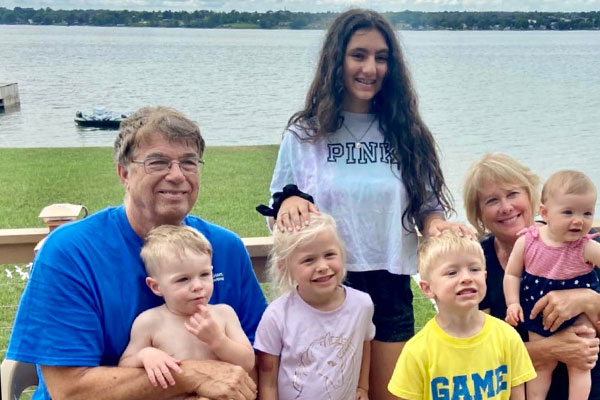
“I have a water slide that I purchased for the grandkids that I couldn’t place on the dock last summer because of the distance from the slide to the river water.’’
The fluctuating river levels – a record high in 2019 of 249 feet to this year’s low – have wreaked havoc on docks.
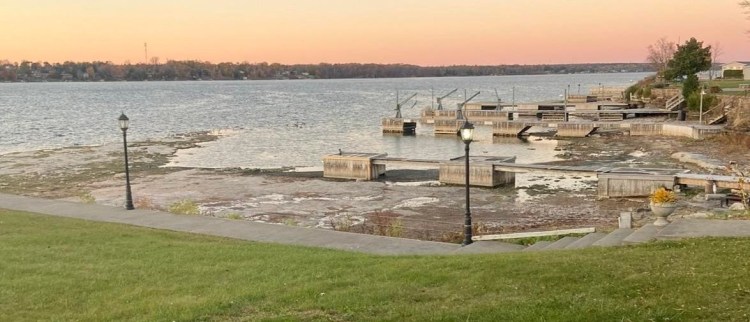
Susan Magee Grandaw of Canton, whose summer place sits just downshore from Jacques Cartier State Park, wished she could show me pictures of her father’s elaborate project, “a mighty dock structure, a U-shape going into an L-shape that withstood the river for over 40-plus years. All it took was fluctuating water levels and one big storm to destroy it all. And now you can’t even replace it without spending a fortune.’’
Mary Candlish, a retired nurse, has lived the last 11 years in a floating home between Alexandria Bay and the back bay at Kring Point. She grew up on Wellesley Island and has been a lifelong river observer. She blames the IJC for changing the river management plan.
“Since 2016 we have had nothing but water issues. My boat was stuck in the muck, props are ruined, and people ran up on shoals that haven’t been a problem in many years.’’
“I live in a floating house. The house has been stuck in the bottom and it’s formed a vacuum. Even if the water comes up enough to float her, I think the vacuum is so great now it’s stuck. Can’t swim, can’t boat. It’s a really bad situation.’’
Becky Doyle’s family has been summering at the river since the 1970s, and now owns a residence at Merry’s Point.
“Our water levels were very low this fall,’’ she said. “Most of our dock was completely out of the water. Except for jet skis and kayaks and flat bottom boats with outboards up, even in July boating was treacherous as there are rocks pretty far out that were only a few inches under the water. So people put empty floating containers out to mark them.’’
“Last year before closing I was walking past all the docks pretty far out to be able to swim. Most people didn’t even put their jet skis in; they used the Morristown boat ramp. Our neighbor near the point got his pontoon boat in but it was stuck at his dock.’’
“So, yeah more water would be nice – barring too much and another year where some camps flooded.’’
It’s in Mother Nature’s hands. We need rain and runoff.
 Holleran Gets It Write